
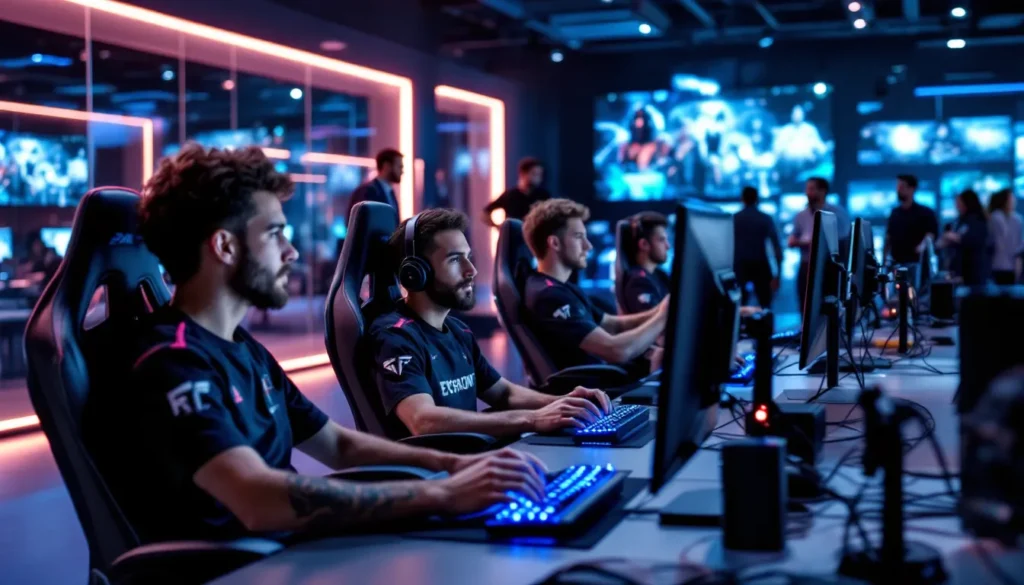
Gaming isn’t just a pastime anymore, it’s a legitimate avenue for cognitive development, mental wellness, and career advancement. Whether you’re grinding ranked matches, speedrunning your favorite title, or watching esports tournaments, you’re part of a global phenomenon that’s reshaping how we think about play. In 2026, the evidence is overwhelming: gaming and esports deliver measurable benefits that extend far beyond the screen. From sharpening your problem-solving abilities to building genuine friendships across continents, the positive impacts are backed by neuroscience, psychology, and real-world success stories. This guide breaks down seven science-backed reasons why gaming is genuinely good for you, and how to maximize those benefits while maintaining balance.
Key Takeaways
- Gaming sharpens cognitive function, problem-solving abilities, and decision-making speed through controlled mental challenges backed by neuroscience research.
- Gaming and esports provide significant mental health benefits, including stress relief, reduced anxiety, and improved emotional resilience through safe failure and flow states.
- Gaming builds genuine social connections and leadership skills across continents, with gaming friendships offering similar psychological benefits to traditional relationships.
- Competitive gaming develops hand-eye coordination and motor skills that transfer to real-world precision tasks, while active gaming platforms deliver legitimate cardiovascular benefits.
- Esports and gaming careers have evolved into a multi-billion-dollar industry offering diverse income opportunities from professional play to streaming, content creation, and esports organizations.
- Gaming delivers maximum benefits when balanced with physical activity, face-to-face relationships, and sleep, as intentional gaming within a healthy lifestyle drives cognitive development without negative consequences.
Gaming Improves Cognitive Function and Mental Sharpness
The human brain is plastic, it adapts and strengthens in response to consistent challenge. Gaming leverages this reality in ways few activities can match. Whether you’re navigating a complex dungeon, managing resources in a strategy game, or reacting to split-second threats in a competitive shooter, your brain is under controlled stress that promotes growth.
Studies from institutions like the University of Rochester have demonstrated that action games in particular enhance visual and auditory processing, allowing players to absorb more sensory information and react faster. But it’s not just about reflexes: the cognitive demands of modern gaming create measurable improvements in executive function, the mental processes that govern planning, attention, and decision-making.
Enhanced Problem-Solving Skills
Every game is fundamentally a problem: overcome this obstacle, defeat this boss, solve this puzzle, outmaneuver this opponent. The best games scale difficulty so you’re constantly pushed to think differently. In puzzle games like Portal or Tetris Effect, you’re forced to visualize spatial relationships and think in three dimensions. In strategy titles like StarCraft or Civilization, you’re managing dozens of variables simultaneously while predicting opponent behavior multiple moves ahead.
Research shows that strategy game players demonstrate superior planning abilities and pattern recognition compared to non-gamers. These skills transfer to real-world contexts, better project planning, resource management, and the ability to anticipate cascading consequences of decisions. The iterative nature of gaming (try, fail, learn, retry) mirrors the scientific method itself, training your brain to approach problems systematically rather than through trial-and-error guessing.
Faster Decision-Making and Reaction Times
Competitive gaming demands split-second decisions. In fighting games, the window between recognizing an opening and executing a punish is measured in frames, sometimes under 100 milliseconds. Esports athletes have been shown to have faster reaction times than the general population, but it’s not innate talent: it’s trained response.
What’s happening neurologically is your brain optimizing signal-to-noise filtering. You learn which visual cues matter, which audio signals demand attention, and how to parse information under pressure. A study from the Max Planck Institute found that gamers showed faster neural processing in areas related to attention and decision-making. This transfers beyond gaming too: players report faster reaction times in driving situations, better ability to multitask, and improved performance in time-pressured professional environments. The TTK (time-to-kill) mentality of competitive gaming, making decisive moves quickly, becomes a life skill.
Mental Health Benefits: Stress Relief and Emotional Resilience
The mental health conversation around gaming has shifted. Rather than blanket warnings, researchers are now documenting specific therapeutic benefits. Games provide controlled environments where you can experience challenge, failure, and success without real-world consequences, a form of cognitive rehearsal that builds emotional resilience.
When you lose a ranked match, your character dies, or your run ends in a roguelike, you’re experiencing managed failure. You respawn, you retry, you learn. This repeated exposure to low-stakes failure trains your brain to handle disappointment and bounce back. Over time, gamers tend to develop higher frustration tolerance and more adaptive responses to setback.
Reducing Anxiety and Depression Symptoms
Gaming provides flow state, a psychological condition where challenge and skill are perfectly balanced, and you become fully absorbed in the present moment. Flow is documented to reduce anxiety and improve mood. Games that demand focus naturally crowd out rumination: you can’t simultaneously worry about life stressors while executing a complex combo or managing a raid.
Multiplayer games add a social dimension that combats isolation, which is crucial because isolation is a primary driver of depression. Research from the American Psychological Association has found that social gaming experiences reduce reported anxiety and loneliness. The structured nature of group gaming (coordinated raids, team-based competitive matches, or cooperative campaigns) provides social interaction without the friction of casual socializing, no small talk required, just shared purpose.
That said, moderation matters. The therapeutic benefits require balance: excessive gaming can become avoidance, which worsens mental health outcomes long-term. The key is using gaming as part of a broader wellness toolkit rather than as sole coping mechanism.
Building Confidence Through Achievement
Gaming provides a rare commodity in modern life: measurable progress with visible rewards. You level up, unlock achievements, climb ranked ladders, and complete quests. Each milestone is tangible proof of improvement. This matters psychologically, especially for players who struggle with confidence in other domains.
In competitive esports, players report significant boosts in self-efficacy, the belief that they can accomplish goals, after improving their rank or winning tournaments. This confidence often bleeds into other areas of life. Multiple player testimonies describe gaining courage in professional settings, social situations, or academic pursuits after achieving gaming milestones. The success isn’t illusory: it’s earned through skill development and practice. That confidence is legitimate.
Social Connection and Community Building
Gaming is fundamentally social, even though the persistent ‘lonely gamer’ stereotype. Modern gaming happens in guilds, Discord servers, esports teams, and streaming communities. These networks are often more stable and diverse than traditional social groups.
The accessibility is part of it. Geographic barriers disappear: you can form deep friendships with people across continents, united by shared interest and common goals. There’s no pressure to perform socially in traditional ways, you’re evaluated on competence and reliability in the game context. For neurodivergent players, socially anxious individuals, or anyone struggling with traditional social scripts, gaming communities can be lifelines.
Teamwork and Collaboration in Multiplayer Environments
Cooperative and team-based gaming is applied leadership and collaboration training. In a raid group, someone has to coordinate resources, manage rotations, adapt to failure, and maintain morale under pressure. These are management skills. In a competitive team sport like League of Legends esports, players develop specialization, communication protocols, and the ability to defer individual glory to team success.
Research shows that teamwork in gaming translates to real-world collaboration. Players report improved ability to communicate under stress, adapt to changing team compositions, and maintain focus on shared objectives. The feedback loop is immediate: poor communication in a ranked match results in a loss you can directly trace. This clarity, seeing exactly how communication breakdowns cause failure, accelerates learning of collaborative skills in ways that classroom training often doesn’t match.
Creating Meaningful Friendships Across Borders
Longstanding gaming friendships rival traditional relationships in depth and longevity. Multiple studies have documented that online gaming friendships have similar psychological benefits to offline friendships, reduced loneliness, increased sense of belonging, and improved overall mental health. The key difference is that gaming friendships are often built on shared values and interests rather than proximity, which can make them more stable.
Esports and streaming communities amplify this. Fans form communities around professional players and content creators, discussing strategy, celebrating wins, and supporting players through personal challenges. These communities create a sense of belonging that satisfies fundamental human needs. The rise of gaming as social infrastructure during the COVID-19 pandemic underscored this: gaming communities provided connection when traditional social venues closed. The relationships formed during that period remain active, proving that gaming-based friendships are genuine and durable.
Physical Health Improvements for Gamers
The gaming-and-health conversation usually focuses on sedentary risks. But modern gaming is far more varied than the image of someone motionless at a desk. From active gaming to hand-eye coordination improvements, the physical benefits are real.
Hand-Eye Coordination and Motor Skills
High-precision gaming demands exceptional hand-eye coordination. FPS players develop accuracy that translates to improved performance in other domains requiring fine motor control, surgery students show measurable improvements in procedural skills after FPS training, for example. This isn’t coincidental: the motor planning required to accurately control ADS (aim-down-sights) positioning or cursor movement trains neural pathways involved in precise movement control.
Fighting game players develop ambidexterity and complex finger dexterity: speedrunners develop optimization of movement efficiency: rhythm game players strengthen motor timing and pattern recognition. A study published in Psychological Science found that action video game players showed superior hand-eye coordination and visual attention compared to non-players. These improvements persist: they’re not just in-game benefits.
Active Gaming and Movement-Based Benefits
Beyond traditional controller-based gaming, active gaming platforms like Ring Fit, VR fitness titles, and motion-based games provide legitimate cardiovascular and strength benefits. A study from Iowa State University found that active gaming improved cardiovascular fitness comparable to traditional exercise for sedentary participants.
VR gaming in particular demands full-body engagement. Titles like Beat Saber, Thrill of the Fight, and half-Life: Alyx require significant movement, balance, and physical exertion. Players report heart rates similar to moderate-intensity cardio during extended VR sessions. As VR technology improves and becomes more accessible, active gaming becomes an increasingly viable component of a fitness routine, one that provides the engagement and flow benefits of gaming while delivering physical activity benefits.
Career Opportunities in Gaming and Esports
Gaming isn’t just good for you personally: it’s becoming a viable economic engine. The esports industry has grown into a multi-billion-dollar enterprise, and gaming-adjacent careers have exploded.
Professional Esports as a Viable Career Path
In 2026, esports salaries are substantial. Top League of Legends players earn six-figure annual salaries from teams alone, before sponsorships. Valorant, CS2, Dota 2, and fighting game professionals command similar compensation. But professional esports is only the tip: beneath the visible pro scene exists a massive infrastructure of semi-professional and amateur competitive gaming where players earn money through tournaments, league play, and grassroots competitions.
Building a gaming and esports tournament with friends can evolve into something more substantial. Esports organizations recruit from grassroots scenes: professional career paths exist in coaching, analysis, talent management, and operations within esports organizations. The infrastructure of professional gaming, training facilities, coaching staffs, analytics teams, medical staff, mirrors traditional sports, creating diverse career opportunities beyond just “being a pro player.”
Streaming, Content Creation, and Gaming-Related Jobs
Streaming platforms have democratized gaming careers. Successful content creators earn through subscriptions, sponsorships, donations, and ad revenue. Top streamers earn millions annually, but the long tail includes thousands of streamers earning meaningful supplementary income from relatively small audiences.
Beyond streaming, gaming content creation spawned entire career categories: YouTube creators, esports journalists (outlets like Dot Esports cover competitive gaming with the depth traditional sports media reserves for football), esports commentators, game designers, balance designers, and community managers. The gaming industry generates more revenue than film and television combined, funding vast numbers of stable, well-compensated jobs.
The career benefits extend beyond income. Gaming careers attract people who might struggle in traditional work environments. Remote positions are standard in esports and content creation, accommodating various accessibility needs. The community-oriented nature of gaming careers means you’re often working alongside people who share your passion, creating more fulfilling work environments than many traditional career paths.
Skill Development: Creativity, Leadership, and Adaptability
Beyond reflexes and tactics, gaming develops meta-skills that transfer broadly. Gamers tend to excel at learning how to learn, extracting lessons from failure, adapting strategies based on new information, and maintaining motivation across long learning curves.
Strategic Thinking and Long-Term Planning
Strategy games demand commitment to multi-stage plans. In 4X games like Civilization, you’re planning civilizational development across centuries. In competitive strategy, you’re predicting opponent moves multiple plays ahead. This forward-planning mindset translates directly to real-world strategic thinking, project management, long-term career planning, and organizational decision-making.
Esports players demonstrate exceptional adaptability to shifting metas. The meta (most effective tactic available) shifts constantly in competitive games: strategies that dominate one patch become obsolete the next. Top players don’t just memorize dominant strategies: they develop frameworks for identifying optimal approaches in any context. This meta-adaptability, the ability to learn how to adapt, is perhaps the most valuable skill gaming teaches. Real-world success increasingly demands this same skill: technological change, market shifts, and organizational restructuring reward people who can rapidly learn and adapt rather than those who rely on fixed knowledge.
Leadership Skills in Competitive and Cooperative Play
Gaming leadership differs from traditional leadership, which is part of why it’s valuable for developing diverse leadership capabilities. In-game leaders manage under time pressure, with imperfect information, and while personally engaged in the same challenges as their team. This creates leadership closer to military or emergency response leadership than boardroom management.
Raid leaders in MMOs coordinate dozens of players, manage complex resource allocation, and adapt plans in real-time based on emergent situations. Esports team captains do similar work at higher stakes. Players who develop these skills report significant confidence transferable to traditional leadership roles. The collaborative problem-solving demanded by complex raids or team-based competitive games builds the collaborative decision-making skills that modern organizations desperately need. You can learn traditional leadership in business school: learning to lead competent people toward a shared goal under pressure and uncertainty is harder to teach, and gaming provides a low-stakes training ground for exactly that scenario. The long-term impact of single-player games shows different benefits, but multiplayer gaming specifically trains collaborative leadership.
Balancing Gaming with a Healthy Lifestyle
All of this assumes gaming exists within a balanced life. The benefits evaporate if gaming becomes avoidance or if it crowds out physical activity, face-to-face relationships, or sleep. The concern isn’t gaming itself but excessive gaming without counterbalance.
Setting Healthy Gaming Habits and Time Management
The strongest predictor of gaming being beneficial versus harmful is whether it’s intentional versus compulsive. Gamers who choose specific times to play, who maintain other hobbies and relationships, and who can stop when intended experience the full spectrum of gaming benefits without negative consequences. Gamers who find themselves unable to stop, who sacrifice sleep or real-world obligations, or who game primarily to escape difficult emotions are more likely to experience negative outcomes.
Practical strategies: Set time limits and use phone/console timers to enforce them. Schedule gaming around other priorities rather than fitting life around gaming. Maintain separate spaces if possible, gaming in a dedicated gaming area rather than where you sleep helps create mental boundaries. Recognize warning signs: if you’re lying to others about how much you’re gaming, if gaming is affecting your grades or work, or if you’re experiencing relationship conflict over gaming frequency, these suggest the balance has shifted unhealthily.
Moderation enables sustainability. Gamers who maintain healthy gaming habits report higher long-term enjoyment and fewer burnout cycles. The competitive gaming scene provides a cautionary tale here: esports professionals who maintain only gaming in their lives often experience faster burnout and struggle with career transitions. The most sustainable gaming careers exist within a broader life context.
Combining Gaming with Physical Activity and Social Interaction
The cognitive, emotional, and social benefits of gaming don’t compete with physical activity, they complement it. A balanced approach combines gaming with regular physical exercise, face-to-face social interaction, and other hobbies. Gaming that replaces physical activity entirely misses out on gaming’s benefits while accumulating sedentary risks.
Active gaming helps here. Regular sessions of VR fitness gaming, rhythm games that demand movement, or active gaming platforms provide gaming benefits while maintaining physical engagement. Gaming can also be social face-to-face: couch co-op experiences, local multiplayer, or gaming communities that occasionally meet in person combine gaming’s benefits with in-person social interaction.
The research on balanced gaming is clear: when gaming is one component of a multifaceted life including exercise, diverse social connections, and varied hobbies, it contributes significantly to psychological well-being and cognitive development. When gaming crowds out these other components, problems emerge. Gaming isn’t a replacement for physical health or traditional social connection: it’s an addition to those foundations. This is why professional esports organizations now employ sports scientists, physiotherapists, and mental health professionals, because they’ve learned that gamer performance and well-being require holistic health support just as much as traditional athletes. How blockchain is disrupting the gaming industry demonstrates how technology continues evolving gaming’s possibilities, but the core principle remains: balanced, intentional gaming within a broader healthy lifestyle delivers the documented benefits outlined here.
Conclusion
Gaming and esports in 2026 aren’t marginal hobbies defended with guilty apologetics. They’re legitimate platforms for cognitive development, emotional resilience, social connection, and skill-building that rival traditional activities in their benefits, and often exceed them in engagement and sustained motivation.
The science is clear: gaming improves cognitive function, builds mental health resilience, creates genuine community, develops physical coordination, opens real career opportunities, and cultivates valuable transferable skills. These benefits aren’t incidental to gaming: they’re core to what makes gaming powerful as human activity.
But benefits require balance. Gaming that replaces physical activity, damages sleep, or substitutes for genuine human connection loses its advantages. The goal isn’t maximum gaming: it’s intentional gaming within a healthy, balanced life.
If you’re a gamer reading this, you already know gaming is rewarding. Now you have the science to back that intuition. Gaming is good for you, when approached with intention and balance. That’s not hype: it’s evidence. Go play, improve yourself, and remember: the best session is the one that leaves you better off and ready to engage fully with the rest of your life.