
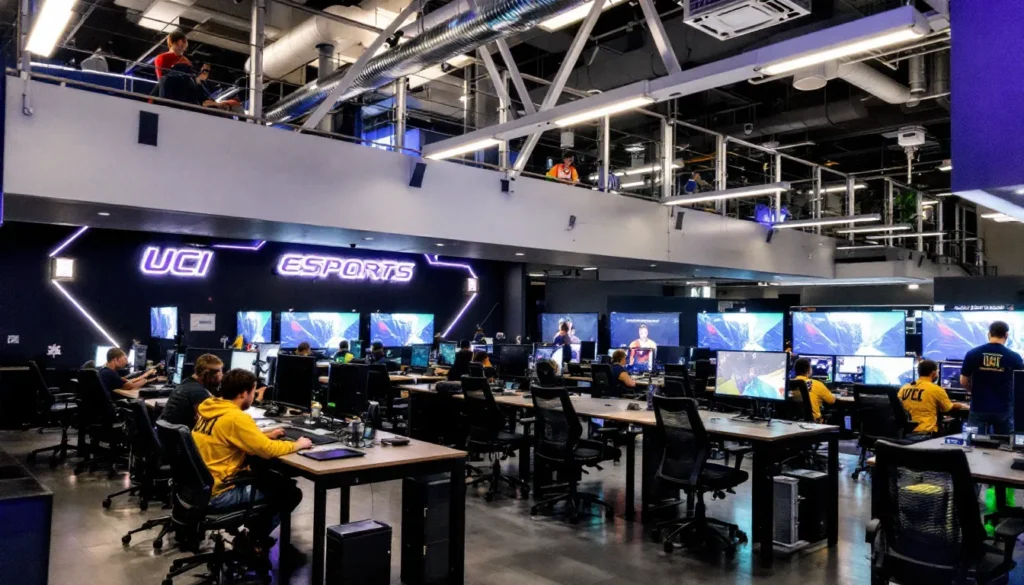
If you’re serious about competitive gaming, UCI Esports represents one of the most respected collegiate esports programs in the country. Based at the University of California, Irvine, the program combines cutting-edge infrastructure, professional-level coaching, and a thriving community of players and fans. Whether you’re considering joining as a competitor, exploring how to transition into esports full-time, or simply curious about what separates elite college programs from the rest, this guide covers everything you need to know about UCI Esports in 2026, from the teams and titles they field to scholarships, campus facilities, and career pathways. The competitive landscape keeps shifting with balance patches and meta changes, so we’ll break down current rosters, recent tournament placements, and how the program structures both competitive excellence and academic success.
Key Takeaways
- UCI Esports is a university-sanctioned competitive gaming program that combines professional-level coaching, dedicated esports infrastructure, and structured player development across tier-one titles like Valorant, League of Legends, and Overwatch.
- Joining UCI Esports as a competitive player requires reaching specific rank thresholds (Immortal/Radiant in Valorant, Diamond+ in League), passing trial scrimmages, and committing 15–25 hours weekly to practice and tournaments.
- UCI’s dedicated esports arena features professional-grade gaming PCs, 240Hz+ monitors, high-bandwidth networking, and streaming equipment that eliminates home latency issues and mirrors professional esports facility standards.
- The program balances competitive excellence with academic rigor, offering academic advising, tutoring resources, and mental health support to prevent burnout and protect players’ long-term career options beyond esports.
- Former UCI Esports players have advanced to professional teams, coaching roles, content creation, and esports administration, demonstrating multiple career pathways beyond competitive gaming itself.
- UCI’s location in Southern California provides access to a thriving esports ecosystem with professional organizations, fighting game arcades, sponsors, and networking opportunities that accelerate player development.
What Is UCI Esports?
UCI Esports is the official competitive gaming program representing the University of California, Irvine. It operates as a university-sanctioned organization that manages multiple teams competing across several tier-one titles in the collegiate esports circuit. Unlike casual gaming clubs, UCI Esports functions with dedicated coaching staff, structured practice regimens, and partnerships with campus and external sponsors that fund operations, facility maintenance, and player development.
The organization bridges the gap between competitive ambition and academic rigor. Players at UCI aren’t just grinding ranked ladders, they’re student-athletes who balance collegiate coursework with tournament preparation, scrim schedules, and team obligations. This dual commitment is what makes programs like UCI attractive to serious competitors who view esports as more than a hobby but not necessarily as their sole career path yet.
UCI’s reputation stems from consistent tournament placements, a well-maintained esports arena, and a coaching philosophy that emphasizes mechanical skill, strategic depth, and team communication. The program competes primarily in the collegiate esports ecosystem but often faces teams fielding semi-pro or aspiring professional players, making every match a genuine test of competitive capability. Many scouts from professional organizations monitor collegiate programs, and UCI consistently produces players who advance to the next level.
The Competitive Programs And Titles
Overwatch And League Of Legends Teams
Overwatch remains a flagship title for UCI Esports, with the program fielding a competitive roster that participates in collegiate leagues and invitational tournaments. The game’s emphasis on role-based teamwork, positioning, and ultimate economy aligns well with UCI’s coaching approach, matches are won or lost through coordination, not individual mechanics alone. The meta continues to shift with hero balance patches, so UCI’s coaching staff regularly updates playbooks and rotation strategies.
The League of Legends team competes in collegiate circuits, representing UCI across multiple competitive seasons. LoL’s complexity, champion pools spanning 170+ champions, itemization depth, and macro play requirements, demands that players specialize in specific roles while maintaining flexibility. UCI’s LoL roster typically includes dedicated top, jungle, mid, ADC, and support players, each grinding their respective role’s meta picks and matchups. The esports coverage from League of Legends esports schedules and standings keeps competitive players updated on meta shifts and tournament formats that influence how collegiate teams prepare.
Valorant And Fighting Game Competitions
Valorant has become increasingly central to UCI’s competitive portfolio. The tactical shooter emphasizes economy management, ability lineups, and site execution, very different from raw aim-heavy shooters. Valorant’s competitive integrity (no RNG elements, no pay-to-win mechanics) appeals to serious competitors, and UCI fielded a squad capable of competing at high collegiate levels. The game’s economy system creates clear win/loss conditions tied to team economic discipline, making coaching more strategic than purely mechanic-focused.
UCI also competes in fighting game tournaments, particularly titles like Street Fighter 6 and Tekken 8. Fighting games demand different preparation, frame-data knowledge, character-specific combos, spacing fundamentals, and mental fortitude for 1v1 play. UCI’s fighting game representation varies by year based on player interest and roster composition, but the program recognizes the competitive legitimacy of the FGC (fighting game community). Unlike team-based titles, fighting game competitors often train solo but benefit from local arcade scenes and matchup practice, which Southern California provides in abundance.
Getting Involved: How To Join UCI Esports
Tryout Requirements And Selection Process
Joining UCI’s competitive teams isn’t as simple as showing up with a high rank. While competitive rank (e.g., Diamond in Valorant, Master tier in League) is a baseline expectation, the selection process evaluates playstyle, communication, attitude, and coachability. Tryouts typically occur at the start of each academic year (fall quarter), and the program announces schedules through their official Discord and social media channels.
Prospective players should expect:
- Rank Verification: Competitive rank in the respective title (exact thresholds vary by team). For Valorant, teams typically target Immortal/Radiant: for LoL, Diamond+: for Overwatch, Master+.
- Trial Scrimmages: Trying out against existing rosters or practice squads to evaluate mechanics, callouts, and decision-making under pressure.
- Interview Component: Coaches assess commitment level, ability to receive feedback, and fit within the team’s culture.
- Availability Commitment: Competitive players commit to practice schedules (typically 15-25 hours weekly during competitive seasons), scrim times, and tournament travel.
Not everyone makes a competitive roster, that’s by design. Teams maintain depth but operate with strict player caps, meaning fewer slots available than interested applicants.
Community Membership And Casual Participation
If competitive tryouts feel like too high a bar, UCI Esports welcomes casual members through their broader community structure. Casual participation includes:
- Weekly Community Events: Tournaments, showmatches, and casual scrims open to all skill levels.
- Discord Access: Real-time communication, LFG (looking for group) posts, and community discussion.
- Watching Pro Play: Community viewing parties during major tournaments.
- Coaching Clinics: Occasional skill clinics where players can learn from competitive roster members.
Many successful competitive players started as casual community members, grinding ranked and attending events until earning roster spots. There’s no pressure to be the best immediately, the community values players willing to improve and participate in team culture.
Campus Facilities And Gaming Infrastructure
The Esports Arena And Practice Spaces
UCI’s esports infrastructure represents a significant competitive advantage. The campus features a dedicated Esports Arena, a specialized facility with high-end gaming PCs, high-refresh-rate monitors, professional-grade network infrastructure, and seating for both players and spectators. This isn’t a converted student lounge: it’s a purpose-built competitive environment.
The arena specs typically include:
- Gaming PCs: Custom builds featuring high-end GPUs (RTX 4090 or newer), fast CPUs, and optimized for low-latency performance.
- Monitors: 240Hz+ refresh-rate displays (standard for Valorant and other competitive titles), color-calibrated for consistency.
- Network: Dedicated high-bandwidth internet with low ping and jitter, critical for online competitive play.
- Seating: Ergonomic gaming chairs and desks designed for extended practice sessions.
- Broadcasting Setup: OBS integration, cameras, and streaming equipment for showcasing matches and building viewership.
Having a dedicated esports arena matters immensely. Players avoid latency issues from home setups, experience consistency across practice sessions, and benefit from a professional environment that mirrors professional esports team facilities. The esports coverage at Dexerto’s esports news regularly highlights how facility quality correlates with competitive success, schools with proper infrastructure outperform those relying on makeshift setups.
Beyond the main arena, UCI provides secondary practice spaces where teams can scrim, review VODs (video-on-demand), and develop strategies without interfering with main roster practice. Coaching staff have dedicated desks for analyzing matches, preparing opponents’ tendencies, and iterating on playbooks.
Academic Support And Player Development
Balancing Competitive Play With Studies
UCI doesn’t treat competitive gaming as separate from academic life, the program actively supports player success in both domains. This is crucial because burnout happens fast when students juggle 15+ credit hours, exams, and 20-hour weekly esports commitments without institutional support.
UCI Esports provides:
- Academic Advising: Dedicated advisors help players structure schedules around tournament dates and scrim intensity peaks. Some quarters feature grueling match schedules: UCI helps players adjust course loads accordingly.
- Tutoring Resources: Access to campus tutoring services specifically for players who need academic support, preventing esports from becoming an excuse for poor grades.
- Mental Health Support: Esports competition creates stress. UCI connects players with campus counseling resources and sports psychologists familiar with gaming’s unique mental demands.
- Study Spaces: Reserved quiet hours in the esports arena for players needing focused study time.
The reality is that competitive esports careers are uncertain. Players who invest years grinding ranked only to suffer injuries, burnout, or organizational cuts face stark career transitions if they’ve neglected academics. UCI’s philosophy, excel at esports while maintaining academic standing, positions players for security regardless of their competitive trajectory. A player who doesn’t make tier-one professional teams can still leverage a UCI degree in computer science, business, communications, or engineering.
Coaches actively encourage time management rather than treating esports as all-consuming. A player who fails out academically isn’t allowed to continue on the team, period. This forces accountability and reminds players that the university experience extends beyond LAN tournaments.
UCI Esports Performance In Regional And National Tournaments
Recent Achievements And Notable Finishes
UCI Esports consistently places in collegiate tournaments, though results fluctuate with roster changes, meta shifts, and opponent quality. Recent tournament finishes (2025-2026 season) show competitive strength across titles:
- League of Legends: UCI’s LoL roster competed in collegiate leagues with mixed results, some seasons producing top-4 finishes, others facing earlier eliminations due to roster instability or meta mismatches. The game’s complexity means season-to-season success depends heavily on whether the team’s champion pools align with the current meta.
- Valorant: Valorant represents UCI’s strongest title, with deep playoff runs in collegiate tournaments and regular victories against ranked opponents. The title’s tactical nature suits UCI’s coaching philosophy, and the roster maintains higher stability than some other teams.
- Overwatch: Overwatch results vary by season depending on patch changes and roster availability. The game’s shift toward 5v5 (from 6v6) required significant tactical overhauls across the competitive scene.
UCI hasn’t won a national championship in recent years, but that’s not the metric that matters most, consistent competitive performance, player development into professional opportunities, and facility/coaching quality matter more. Several former UCI players have advanced to professional esports teams, proving the program’s ability to develop talent.
For context on competitive gaming’s broader landscape, the leading esports games include titles that UCI fields, confirming they’re investing in relevant competitive ecosystems rather than niche games. The program monitors esports coverage from outlets like Dot Esports to stay informed on meta shifts, roster moves, and competitive trends that influence their own strategy.
Building Your Esports Career: Scholarships And Career Paths
UCI offers limited esports scholarships, the reality is that collegiate esports scholarships are rarer than most assume, and those that exist often provide partial rather than full coverage. But, the university recognizes esports through various support mechanisms:
- Athletic Scholarships: Some UCI players receive academic or need-based financial aid alongside esports involvement, though these aren’t esports-exclusive scholarships.
- Tuition Support Programs: Partnerships with esports organizations or sponsors occasionally provide direct player stipends or tuition assistance.
- Salary/Prize Distribution: Tournament winnings and organizational stipends from sponsors are distributed to competitive roster players, providing income during competitive seasons.
Beyond scholarships, UCI Esports opens career pathways. Players develop:
- Professional Esports Prospects: A successful UCI career demonstrates competitive credentials that professional teams evaluate. Scouts watch collegiate tournaments and track up-and-coming players.
- Coaching Opportunities: Former UCI players sometimes return as coaches or assistant coaches, leveraging their competitive experience and tournament knowledge.
- Content Creation: Streaming, YouTube commentary, and esports journalism appeal to competitive players with audience reach.
- Esports Administration: Tournament organization, team management, and esports operations roles value experience in competitive programs.
- Game Development: Understanding competitive play informs game balance design, esports integrity systems, and competitive title creation.
The most realistic path remains: compete at UCI, maintain strong academics, build a portfolio (streaming, content, tournament placements), and network aggressively. If professional esports doesn’t materialize, the degree and esports experience position you for gaming industry roles, tech companies seeking esports-aware talent, or traditional careers entirely separate from gaming. Pursuing an esports degree involves understanding that esports careers are uncertain, UCI’s structure acknowledges this reality rather than overselling professional prospects.
Why Choose UCI For Competitive Gaming
UCI Esports stands out for several concrete reasons that differentiate it from other collegiate programs:
Infrastructure Quality: The dedicated esports arena with professional-grade equipment eliminates the “my home internet is too laggy” excuse. Players practice in conditions matching professional tournaments, building genuine competitive experience.
Balanced Philosophy: UCI refuses to treat esports as separate from education. This protects players from burnout and positions them for career flexibility if professional gaming doesn’t materialize.
Regional Strength: Southern California’s esports ecosystem is massive, dozens of organizations, thriving fighting game arcades, streaming communities, and networking opportunities abound. Being located in Orange County places players near professional teams, sponsors, and industry figures.
Coaching Expertise: UCI’s coaching staff bring experience from various competitive backgrounds. They understand meta changes, player psychology, and team dynamics rather than defaulting to generic motivation speeches.
Community Culture: Beyond competitive rosters, UCI’s esports community is welcoming to casual players, content creators, and esports fans. The program isn’t gatekept or exclusionary, there’s room for everyone from competitive aspirants to people who just want to watch matches and hang out.
Tournament Experience: Consistent participation in competitive tournaments builds tournament mentality, the ability to perform under pressure, adapt in-game to opponent strategies, and recover from losses mentally. This separates serious competitors from ranked grinders.
Choosing UCI means joining a program that respects gaming’s competitive legitimacy while maintaining institutional standards that protect player well-being. It’s not the flashiest program or the one with the largest prize pools, but it’s sustainable, well-run, and genuinely invested in player development.
Conclusion
UCI Esports represents a mature collegiate program that balances competitive excellence with player development and academic rigor. Whether you’re aspiring to compete at the highest level, explore esports as a community, or simply understand what separates elite programs from casual setups, the program offers a clear model for how esports can exist sustainably within higher education.
The esports landscape will continue evolving, new titles emerge, meta shifts reshape team compositions, and professional opportunities fluctuate. But programs like UCI’s endure because they focus on fundamentals: quality coaching, proper infrastructure, institutional support, and genuine care for player outcomes beyond tournament placements.
If competitive gaming is on your radar and you’re considering your options, UCI deserves serious consideration. The program proves that esports excellence doesn’t require compromising your education or betting your entire future on an uncertain career path. That’s increasingly rare in a competitive gaming landscape where many programs overpromise and underdeliver.
For anyone curious about esports careers or considering UCI seriously, take time to observe the community, attend viewing parties, and understand what commitment actually looks like. Competitive gaming rewards discipline, coachability, and sustained effort, exactly what makes UCI’s approach resonant. Your journey in esports might lead to professional opportunities, or it might lead somewhere entirely different. Either way, starting at a program that respects both possibilities puts you ahead.