
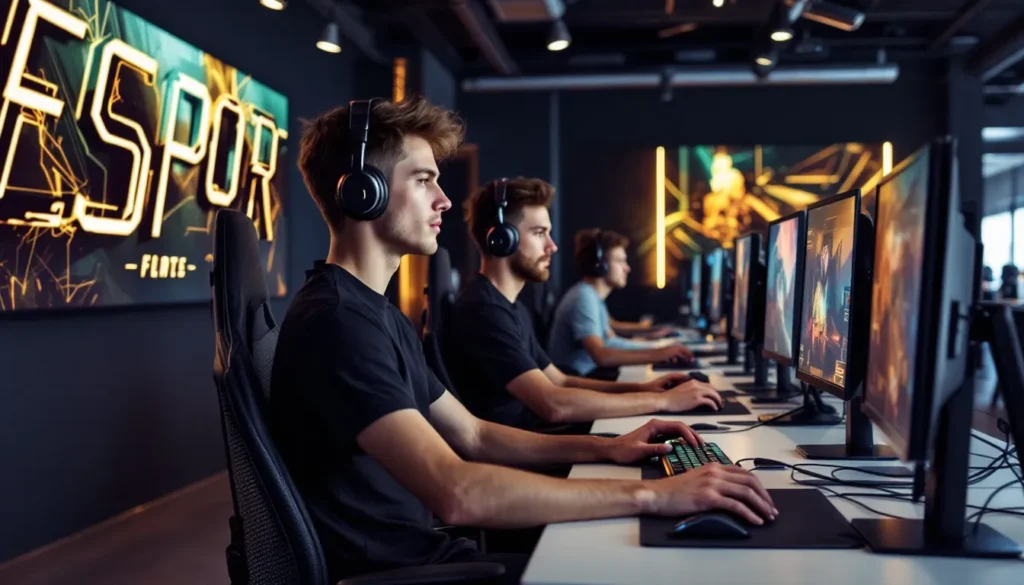
Summer is prime time for gamers to sharpen their competitive edge, and esports summer camps have become the go-to destination for players serious about improving. Whether you’re grinding toward a pro career, trying to break into a competitive team, or just want to play alongside other dedicated gamers, an esports summer camp offers structured training that casual grinding alone can’t match. These intensive programs pull together coaching, community, and real tournament experience, all the ingredients that separate ladder grinders from genuinely competitive players. If you’re thinking about leveling up this summer, here’s everything you need to know about finding and maximizing an esports camp experience.
Key Takeaways
- Esports summer camps provide structured coaching, competitive scrimmaging, and intensive training that significantly accelerates skill development compared to solo grinding, with many programs guaranteeing rank improvements over two-week sessions.
- Three main types of esports summer camps are available: game-specific programs (League of Legends, Valorant, CS2), all-around bootcamps covering multiple titles, and streaming/content creation camps for aspiring content creators.
- Successful esports camps prioritize credible coaching from former pro or high-rank players, offer legitimate tournament opportunities, provide clear schedules and accommodation details, and maintain transparent refund policies to ensure quality experiences.
- In-person camps deliver the highest training intensity and networking value ($1,500-6,000), while virtual camps offer flexibility and lower costs ($400-2,000), and university-based programs provide quality facilities with potential scholarship opportunities.
- Maximize your esports summer camp experience by arriving game-ready with a high rank, setting specific measurable goals, actively engaging with feedback, building lasting peer connections, and maintaining momentum through post-camp training routines and regular practice groups.
- Early registration for summer camps is critical as top programs fill quickly and typically offer 10-20% discounts for early signups, making now the time to research and commit to a competitive training experience.
What Are Esports Summer Camps?
Esports summer camps are intensive, short-term training programs designed to develop competitive gaming skills during the summer break. Unlike casual gaming at home, these camps bring together players of similar skill levels or interests under the guidance of experienced coaches and pro players. Campers spend multiple hours each day, typically 6-8 hours, scrimmaging, reviewing replays, learning strategy, and competing in mini-tournaments.
They vary wildly in scope. Some are one-week intensives held at local community centers: others are two-week deep dives at dedicated esports facilities. The structure differs too: some camps focus exclusively on one game (like a League of Legends esports summer camp or Valorant-specific bootcamp), while others run broad programs covering multiple titles. Virtual options have exploded since 2024, letting players join from their home setup without traveling.
The core appeal is focused coaching. Instead of watching YouTube guides or grinding solo queue, campers get direct feedback from people who’ve competed at high levels. You’re also surrounded by players just as committed as you are, no casuals, no smurfs throwing games. That environment pushes you harder than solo practice ever could.
Types of Esports Summer Camps Available
Game-Specific Programs
Game-specific esports camps zero in on mastery of one title. A League of Legends camp teaches macro play, wave management, gank setup, and team fight positioning. A Valorant bootcamp drills aim consistency, ability usage timing, and spike plant executions. A Counter-Strike 2 camp focuses on economy management, spray control, map control, and retake scenarios.
These programs work because they go deep. Coaches can drill specific mechanics, ADS accuracy in shooters, CS efficiency in MOBAs, clutch decision-making in tactical titles. You’ll play hundreds of ranked matches, review dozens of replays, and practice your weakest roles or agents. The specialization means faster improvement if you’re already committed to that game.
All-Around Esports Bootcamps
Bootcamp-style programs teach transferable esports fundamentals across multiple games. They cover communication discipline, mental toughness, team structure, draft theory (where applicable), and how to analyze replays systematically. Campers typically rotate through 3-5 different titles over the session so they can see how concepts apply across genres.
These work best for younger players or those uncertain which game to focus on. You’ll get exposure to the esports industry’s biggest franchises and understand what separates casual players from competitive ones. Many bootcamp programs also include career talks and networking with pro players and team managers.
Streaming and Content Creation Camps
Not every esports camp focuses purely on competitive ranked improvement. Streaming and content creation camps teach players how to build an audience, monetize through streaming, edit highlight reels, and engage communities. These overlap with competitive training but add business and creative skills.
If you’re aiming to become a streamer or content creator rather than (or plus to) going pro, these camps teach the behind-the-scenes work: camera setup, mic technique, chat moderation, audience growth tactics, and sponsorship negotiation. Dexerto and similar esports news sites regularly feature rising content creators from these programs.
Key Benefits of Attending an Esports Summer Camp
Skill Development and Competitive Training
The most direct benefit is measurable skill improvement. Campers train under coaches who’ve played competitively and understand exactly what separates Silver from Gold, Gold from Diamond. You’ll get corrected on positioning, micro-mechanics, macro timing, and decision-making, the stuff you can’t always identify yourself.
Many programs guarantee players will improve by at least one competitive rank during a two-week session. Some offer more aggressive guarantees: players reach Gold from Silver, Diamond from Platinum. The intensity is structured specifically for improvement. You’re scrimming 4-5 hours daily, reviewing replays with coaches, drilling mechanics in aim trainers or practice tools, and competing in daily mini-tournaments. That focused volume is how improvement actually happens.
Networking and Community Building
You’ll meet players across your region, teammates, rivals, and future collaborators. Many campers form lasting team friendships and go on to queue together after camp ends. That network is invaluable. Professional esports runs on relationships. Teams scout from these camps. Sponsors notice consistent faces. Streamers collab with players they met at bootcamps.
The peer environment matters too. Training alongside hungry, skilled players is motivating in ways solo grinding isn’t. You see what commitment looks like. You’re pushed by competition every single day, not just once a week when you feel like grinding ranked.
Professional Coaching and Industry Exposure
You’ll interact with actual esports professionals, players who’ve competed at Challengers level or above, team managers, scouts, and sometimes franchise coaches. This exposure is critical. You get mentorship on how the industry works, what scouts look for, and what separates part-time grinders from pro prospects.
Some camps bring in team representatives to watch scrimmages. Players get feedback on what would translate to organized play. You understand coaching structures, team practice regimens, and what’s expected at higher levels. That clarity helps you decide if esports is a realistic path or if you’re better off balancing gaming with other pursuits.
What to Look For in an Esports Summer Camp
Coaching Quality and Instructor Credentials
Not all camps are equal. The best differentiate on coaching. Research whether instructors are former pros, current content creators, or just experienced grinders. Check if they’ve played competitively, what rank/level did they achieve? Can they speak credibly about high-level play?
Read reviews from past campers. Ask direct questions: Will coaches review individual replays with me? What’s the coach-to-player ratio? Do instructors stay active in ranked or competitive play, or are they teaching based on outdated knowledge? The worst camps hire gym-rat coaches who’ve never competed at the level they’re teaching.
Credential verification matters. A Valorant coach should have reached Radiant or highest rank. A League coach should have hit Masters or Challenger. A content creation coach should have a substantial, verified audience. Camps that hedge on credentials or focus only on “industry experience” are red flags.
Game Selection and Tournament Opportunities
Confirm which games the camp covers. If you want to focus on League, don’t pick a camp that treats it as a secondary option. Ask about tournament structure: Are there daily scrimmages? Weekly tournaments? Qualifiers for external competitions? The best camps feed campers into real esports tournaments or qualifiers.
Check if the leading competitive games are covered, League, Valorant, CS2, Dota 2, fighting games, etc. Multi-game camps should split time fairly, not just tack a second game on as filler. If the camp includes tournament play, research those tournaments. Are they sanctioned? Do they offer prize pools? Will winners get attention from orgs or scouts?
Schedule, Location, and Accommodation Options
Use practical filters. Does the camp fit your summer? Some run one week in June, others run staggered two-week sessions throughout June-August. Location matters: in-person camps in major cities (Los Angeles, Dallas, Chicago, New York, Seattle) attract better coaches and more competitive campers.
Accommodation details are critical if you’re traveling. Does the camp provide dorm housing? Can you arrange your own? What’s included, meals, snacks, overnight supervision? The best camps are all-inclusive so you can focus on gaming without logistics stress. Check if they provide equipment (PCs, monitors, chairs) or if you need to bring your own.
Also ask about refund policies. What if you need to cancel? Are there makeups if you miss a day? Legitimate camps have clear policies. Sketchy operations avoid transparency.
Popular Esports Summer Camp Options for 2026
Traditional In-Person Camps
In-person camps remain popular because the training intensity and networking payoff are hard to replicate remotely. Major esports hubs like Los Angeles, Texas (Dallas, Austin), and the Pacific Northwest (Seattle, Portland) host the biggest operations. These camps typically rent out esports facilities or partner with universities.
Reputable in-person camps often pull coaches from regional pro teams or former franchise players. They host weekly scrimmages against other camp groups and, in some cases, qualify winners for real tournaments. Cost runs $1,500-4,000 for one-week sessions and $2,500-6,000 for two weeks, including accommodation. Demand spikes in late May through June, so early registration is essential.
In-person camps excel at accountability. You can’t skip practice when the coach is literally standing next to your desk. Peer pressure and live competition breed faster improvement than remote training.
Online and Virtual Esports Camps
Virtual camps launched widely during 2020-2021 lockdowns and haven’t slowed down. They offer flexibility, train from your home setup with your familiar gear. No travel costs. No accommodation hassles. You attend sessions on a schedule, usually mornings or afternoons (time zone adjusted), and play scrimmages on your main account.
The tradeoff is reduced intensity and coaching contact. It’s hard for a coach to correct your monitor positioning or check your equipment through a screen. Networking happens, but asynchronously. Virtual camps suit players who are self-disciplined and have a competitive ranked environment locally. Cost is lower: $400-1,200 for a week, $800-2,000 for two weeks.
Quality varies. Some virtual camps are poorly structured. Find ones with fixed schedules, live coaching sessions, and recorded replays so you can review later.
University-Based Programs
Colleges increasingly offer esports summer camps as revenue and recruiting tools. University facilities are quality (good PCs, strong internet), coaches are vetted, and scholarship opportunities sometimes surface. Universities often target high school students with the implicit hope they’ll enroll.
University camps tend to be legitimately well-run because the institution’s reputation is on the line. Instruction quality is typically solid. Pursuing an esports degree has become realistic at many schools, and summer camps are your first exposure to that ecosystem.
Cost varies by school but generally falls between $800-2,500 for a one-week session. Some schools offer financial aid or scholarships to exceptional players. University camps also function as early recruitment, strong players get flagged for scholarship conversations later.
How to Prepare for Your Esports Summer Camp Experience
Equipment and Hardware Considerations
Don’t show up to camp with suboptimal gear. If you’re attending in-person and bringing your own setup, ensure everything works. Test your keyboard, mouse, headset, and monitor before you arrive. Bring backups for your mouse and keyboard, mechanical keyboards can fail, and a dead mouse ruins your day.
Confirm camp-provided equipment specs in advance. What’s the monitor refresh rate and resolution? What mouse DPI does the system default to? What’s the upload/download bandwidth? Ideally, test on similar gear at a friend’s or local esports café so you’re not adjusting on day one. Rig familiarity directly impacts your performance.
If attending virtually, optimize your home setup. Upgrade your monitor to at least 144Hz if possible (shooter games especially demand higher refresh rates). Ensure your internet is stable, ideally wired Ethernet, not WiFi. Close background apps and disable notifications during sessions. Your equipment won’t transform your rank, but poor equipment creates frustrating distractions.
Pre-Camp Training and Conditioning
Arrive camp-ready, not hoping the camp gets you ready. That means hitting your current rank ceiling before camp starts. If you’re aiming for Gold, grind to Gold first. If you’re Platinum, aim for Diamond. Starting camp already calibrated to a high rank means coaching can push you further faster.
Physical conditioning matters more than most gamers admit. Esports is mentally taxing, 8 hours of intense focus daily is draining. Build stamina by gaming for extended periods (6+ hours) in the weeks before camp. Take proper breaks (5 minutes per hour), stretch, hydrate, and practice decent posture so you don’t destroy your back during camp.
Mentally, understand what you’re weak at. Identify your worst matchup, your worst role/agent, your worst macro habit. Come prepared to specifically work on those gaps. Camps are short: targeted improvement beats general grinding.
Mental Preparation and Goal Setting
Set specific, measurable goals. “Get better” is vague. “Climb from Platinum 2 to Diamond 3” is concrete. “Learn mid lane wave management” is actionable. Share goals with coaches so they can structure feedback around them.
Expect humbling moments. You’ll play against players better than you. You’ll lose scrimmages. You’ll get criticized on positioning. That’s the point. Top athletes thrive in environments that expose their weaknesses. If you’re defensive about feedback, you’ll waste the opportunity.
Prepare for social intensity too. You’ll be around ambitious players 8-10 hours daily. Bring energy, ask questions, and be genuinely interested in others’ experiences. The best camp outcomes come from players who lean into community, not ones who isolate.
Maximizing Your Experience: Tips for Success
Embracing the Learning Mindset
Show up ready to be wrong. Every correction from a coach is information, not criticism. The players who improve fastest are the ones who take notes, ask clarifying questions, and immediately apply feedback. Bring a notebook. Jot down specific coaching points. Review them between sessions.
Watch replays actively. Don’t just passively review footage. Pause when you make mistakes and ask yourself: Why did I position there? What was I trying to accomplish? What should I have done differently? Have coaches review with you. They’ll spot decision-making errors you can’t see yourself.
Compare yourself to campers better than you, not worse. If there’s a Grandmaster-level player at camp, watch them. Ask what they prioritize. Study their decision-making. That’s how ceiling-raising happens.
Building Lasting Connections
Exchange Discord handles and actually follow up. Add campers to your ranked queue friends list. Schedule games together after camp. The relationships that last are the ones you intentionally maintain.
Network with coaches too, but respectfully. Don’t bombard them with messages, but genuine questions and follow-ups are welcome. If a coach gave you solid feedback, circle back in a month with results: “Hey, I’ve been working on the ward placement habits you mentioned. I’m doing better tracking junglers now.”
Attend any optional social events. Dinners, gaming sessions outside of scheduled camp time, team building activities, these create actual friendships, not just transactional connections. The best camp bonds form off the main stage.
Post-Camp Development and Continued Growth
The camp ends, but improvement doesn’t. Create a post-camp routine that sustains momentum. Keep a training log, play 3-4 hours daily, reserve 1 hour for replay review, spend 30 minutes drilling mechanics.
Schedule regular games with camp friends. Having a consistent group to queue with accelerates growth because you’re developing team synergy and communication. Many former campers form actual competitive teams that eventually compete in real tournaments.
Stay connected to the esports ecosystem. Follow competitive esports coverage to understand meta shifts, patch changes, and how pro teams are playing. When patches drop or new agents/champions release, review how top teams adapt. That knowledge directly improves your adaptability in ranked.
Consider returning to camp next summer if improvement plateaus. Competitive players often return annually. You’ll train harder knowing what to expect, form deeper connections, and potentially level up to more advanced tracks. The best players don’t attend camp once, they make it a summer tradition.
Conclusion
Esports summer camps have become essential for players serious about competitive improvement. Whether you choose a game-specific bootcamp, an all-around esports program, or a university-based option, the structured coaching, intense training volume, and community environment create conditions for real skill acceleration. The key is selecting a legitimate camp with credible coaches, matching the program type to your goals, and arriving prepared to work hard.
The summer window is short. Three months from now, you’ll either have invested in serious training or you’ll have lost three months of grinding time. Camps compress months of solo improvement into weeks by removing distractions and surrounding you with committed players. If you’re genuinely interested in climbing ranks, testing your skill against competitive players, or exploring whether esports could be a serious path, a summer camp is where that investigation happens.
Start researching now. Registration for the best camps fills quickly, and early-bird pricing is typically 10-20% cheaper than last-minute signups. Commit to the experience fully, embrace the grind, and plan to emerge in September significantly better than you started.