
If you mention “cute games” in a gaming Discord, you’ll likely get a few eye rolls, but the landscape has shifted dramatically. Kawaii gaming, rooted in the Japanese aesthetic of cuteness and charm, has exploded into a legitimate genre embraced by competitive players, streamers, and hardcore enthusiasts. It’s 2026, and adorable doesn’t mean easy, shallow, or exclusively for children anymore. From challenging roguelikes wrapped in pastel aesthetics to story-driven adventures with emotional depth, kawaii games are proving that gameplay substance and visual charm aren’t mutually exclusive. This guide breaks down what kawaii gaming actually is, why adult gamers are gravitating toward it, and which titles across PC, console, and mobile platforms deserve space in your library.
Key Takeaways
- Kawaii gaming combines cute aesthetics with genuine gameplay depth—roguelikes, tactical RPGs, and narrative adventures that rival traditional blockbuster experiences in challenge and emotional impact.
- Adult gamers embrace kawaii games for their psychological safety and lower-friction learning curves, offering a refreshing alternative to grimdark shooters and irony-poisoned narratives.
- Games like Hollow Knight, Celeste, Spiritfarer, and Stardew Valley have shattered outdated stigma by selling millions of copies and establishing thriving competitive communities and streaming audiences.
- Kawaii game design excels through deliberate visual storytelling—character proportions, color palettes, and exaggerated animations create instant emotional connections and clarity that transcend language barriers.
- Kawaii gaming hardware doesn’t require cutting-edge specs; mid-range PCs with quality displays, a Nintendo Switch, or any recent smartphone handles the entire genre comfortably, making it accessible across all platforms.
What Is Kawaii Gaming?
Kawaii gaming centers on games featuring cute, charming aesthetics rooted in Japanese pop culture. The term “kawaii” literally translates to “cute” in Japanese, but it encompasses more than just adorable character designs, it’s a complete visual and emotional philosophy.
These games typically feature soft color palettes, rounded character designs, whimsical animation styles, and worlds that feel inviting rather than threatening. But, kawaii doesn’t equal simplistic. Many kawaii games demand precision, strategy, and mechanical skill. You’ll find roguelikes with punishing difficulty curves, tactical RPGs with complex systems, and narrative experiences that hit harder emotionally than triple-A blockbusters.
The genre spans multiple platforms and subgenres. A kawaii game might be a cozy farming sim, a fast-paced action title, a noir detective story with cute characters, or an esports-ready competitive experience. The unifying thread is the aesthetic philosophy: prioritizing approachability and charm without sacrificing depth or challenge.
Kawaii games draw heavily from Japanese gaming traditions, Nintendo’s approach to accessible design, Studio Ghibli’s visual storytelling, and anime’s expressive character work. But the genre has globalized. Western indie developers now create distinctly kawaii experiences, blending cuteness with cultural contexts from their own backgrounds. This cross-pollination has made kawaii gaming more diverse and creatively ambitious than ever.
The Appeal Beyond the Aesthetic
Why Adult Gamers Are Embracing Cuteness
Adult gamers aren’t drawn to kawaii games even though the cuteness, they’re drawn because of it. After years of grimdark shooters, morally gray antiheroes, and always-online live-service grinds, there’s genuine appetite for something different.
Cuteness creates psychological safety. A kawaii game signals: this is a space where you can relax, experiment, and fail without cynicism. There’s no performative edge, no irony-poisoned worldbuilding. When you fail in a challenging kawaii game, the world doesn’t feel hostile, it feels encouraging. This design philosophy creates lower friction for learning curves and higher engagement with difficult mechanics.
Kawaii games also tap into nostalgia. Many adult gamers grew up with Nintendo’s colorful, character-driven franchises. Kawaii gaming aesthetically echoes that heritage while offering mature themes, sophisticated gameplay, and narratives that respect the player’s intelligence. It’s not a return to childhood, it’s a reclamation of joy without the condescension.
There’s also an element of identity and community. Liking cute games signals taste, personality, and comfort with being “different” in gaming spaces historically dominated by hypermasculine aesthetics. For many players, especially marginalized gamers, kawaii games offer representation and spaces where their existence doesn’t feel tokenized.
Breaking the Stigma Around Cute Games
For decades, “cute” was gaming’s scarlet letter. Coverage skewed toward dismissing cute games as casual, female-focused, or not “real” gaming, a gendered bias that persists in certain communities. But data and cultural momentum have obliterated these narratives.
Market share tells the story. Games like Hollow Knight, Celeste, Spiritfarer, and Stardew Valley have sold millions of copies and sustained thriving communities for years. Competitive players stream cute games to hundreds of thousands of viewers. Speedrunners grind kawaii titles at GDQs alongside dark souls-likes. The stigma hasn’t vanished, gatekeeping still exists, but it’s increasingly isolated to aging forums and discord servers.
Content creators have been crucial in this shift. Major streamers and YouTubers openly featuring cute games in their rotations normalized the genre for audiences who might otherwise skip it. When someone with 500k followers says “this adorable game just destroyed me,” it carries weight.
The industry has taken notice. Larger publishers are greenlighting kawaii projects knowing there’s proven demand and less saturation than in hypercompetitive shooter and action-adventure markets. Independent developers, freed from publisher pressure to chase mainstream appeal, have made kawaii gaming their primary focus, and thrived.
Top Kawaii Games Across Platforms
PC and Console Kawaii Titles
PC and console platforms host some of the most mechanically demanding and narratively rich kawaii games available.
Hollow Knight (PC, PS4, Xbox One, Switch) remains the gold standard for challenging kawaii action. This 2D metroidvania features a silent knight protagonist, interconnected world design, and combat that demands precision and patience. Boss fights test your skill ceiling: the game respects you enough not to hold your hand.
Celeste (PC, PS4, Xbox One, Switch) pairs pixel-art charm with platforming that separates skill tiers. The story addresses mental health and self-doubt with surprising emotional weight. Speedrunners have turned it into an esports-adjacent competitive scene with world records and category breakdowns rivaling traditional fighting game communities.
Spiritfarer (PC, PS4, Xbox One, Switch) proves that kawaii games can tackle grief and mortality. You ferry spirits to the afterlife, completing tasks and building relationships. The hand-drawn art style and emotional narrative have made it a standout indie title: it’s won multiple awards and cultivated a dedicated fanbase.
Hades (PC, PS4, Xbox One, Switch) merges roguelike mechanics with Greek mythology and Supergiant’s signature art direction. The gameplay loop, die, learn, progress, repeat, is compulsively engaging. Voice acting and character writing elevate it beyond typical roguelike narratives.
Unpacking (PC, PS4, Xbox One, Switch) is a “zen puzzle game” about arranging belongings in living spaces. Zero combat, zero timers, zero stress. It tells a story through environmental storytelling and object placement. It’s proof that kawaii games don’t need traditional gameplay mechanics to be compelling.
A Short Hike (PC, PS4, Xbox One, Switch) is a brief exploration game about hiking a mountain. The voxel art, exploration-based structure, and chill soundtrack create an experience more about atmosphere than challenge. It’s the gaming equivalent of a comfort read.
Mobile Kawaii Gaming Gems
Mobile platforms have become central to kawaii gaming, offering bite-sized experiences and deep engagement.
Cozy Grove (iOS, Android, Switch) is a cozy community-sim where you decorate an island and help ghost characters. Daily tasks, seasonal events, and zero pressure create a relaxing loop. The art style is distinctly kawaii: the pacing respects your time.
Crossy Road (iOS, Android, PC, PS4, Xbox One, Switch) combines voxel-based graphics with arcade-inspired hopper mechanics. It’s simple to learn, difficult to master, and endlessly replayable. The cute aesthetic masks surprising depth.
Doodle Jump (iOS, Android) is a vertical climber where you tap to move a doodled character upward, avoiding enemies and collecting power-ups. It’s been refining its formula since 2009 and remains addictive. The hand-drawn aesthetic is quintessentially kawaii.
Stardew Valley (iOS, Android, PC, PS4, Xbox One, Switch, MacOS) is the definitive cozy farming sim. You inherit a farm, plant crops, fish, fight in mines, and build relationships with townspeople. The depth belies its simple aesthetic: players sink 100+ hours easily.
Indie Kawaii Games Worth Your Time
Independent developers have pushed kawaii gaming in innovative directions.
Night in the Woods (PC, PS4, Xbox One, Switch, MacOS) features 2D hand-drawn animation and a story about returning to your hometown. It’s a narrative adventure with light exploration: the writing is sharp, funny, and touching. The art style feels distinctly illustrated, more like animated fanart than typical game graphics.
Undertale (PC, PS4, Xbox One, Switch, MacOS) subverts RPG tropes with a story about a child in an underground monster kingdom. The combat system uses dodging mechanics within dialogue trees. Even though the cute aesthetic and quirky humor, it engages with themes of choice, morality, and violence that provoke genuine discussion.
Omori (PC, PS4, Xbox One, Switch) is a psychological horror RPG wrapped in cute, dreamy aesthetics. The contrast between the visual presentation and narrative content creates genuine discomfort. It’s not a game for everyone, content warnings apply, but it’s a masterclass in using cute aesthetics to disarm players before emotional impact.
Genshin Impact (PC, PS4, PS5, iOS, Android) is a gacha action RPG with anime-inspired character designs and a large open world. The visual presentation is unambiguously kawaii: the gameplay combines exploration, combat, and puzzle-solving. Its massive player base and ongoing content updates have made it a cultural force in gaming.
recent coverage from Japanese gaming announcements has highlighted dozens of smaller kawaii titles gaining traction in 2025-2026, particularly from South Korean and Southeast Asian indie developers bringing their own cultural aesthetics to the genre.
Kawaii Game Design Elements That Make Them Stand Out
Art Style and Visual Storytelling
Kawaii games prioritize visual clarity and emotional communication through art. Developers use color, shape language, and animation to convey tone and information instantaneously.
Character proportions follow specific rules: larger eyes relative to head size, rounded features, minimal shading, and expressive animation. These design choices trigger psychological responses, we’re hardwired to find certain proportions appealing and trustworthy. A rounded character feels safer than an angular one: a character with large eyes reads as innocent or vulnerable.
Color palettes are deliberately chosen to avoid harshness. Pastel tones, vibrant but unsaturated hues, and strategic use of contrast guide player attention without visual assault. Backgrounds often feature parallax scrolling and hand-drawn elements that prioritize charm over technical realism.
Animation in kawaii games is deliberately exaggerated. A character doesn’t just pick something up, they pick it up with flourish and personality. Idle animations include small movements and quirks. This level of polish in animation makes worlds feel alive and characters feel like friends rather than NPCs.
Kawaii games also use visual metaphor effectively. Emotions are represented through visual effects: sparkles for joy, dark clouds for sadness, heart shapes for affection. This visual language transcends language barriers and creates immediate emotional resonance.
Character Design and Emotional Connection
Character design in kawaii games serves narrative and mechanical purposes. Every character communicates their role and personality instantly through silhouette, color, and design choices.
Consider how Hollow Knight‘s protagonist, a small, graceful bug in a tattered cloak, creates immediate sympathy. The design implies vulnerability even though the game’s difficulty. Compare that to a human knight in full armor: the visual language reads as invulnerable and intimidating. The kawaii design choice makes the narrative of a small creature standing against overwhelming odds resonate more powerfully.
Kawaii games invest heavily in character relationships because cuteness creates emotional investment. Players develop attachment to cute characters faster than to neutral ones. Developers exploit this, not manipulatively, but intentionally, to make narrative moments land harder. When a cute character faces hardship or loss, players feel it more acutely.
Voice acting (when present) typically matches the aesthetic: expressive, emotional, and often featuring voice actors who can convey humor and pathos simultaneously. Writing in kawaii games often uses humor as a storytelling tool, but not as a shield against emotional moments. The contrast between lighthearted banter and genuine vulnerability creates dynamic character moments.
Emoji-like character expressions are common. A character’s entire emotional state can communicate through expressions without dialogue. This supports accessibility for players with hearing difficulties and creates a visual language that translates across cultures.
Soundtrack and Atmosphere
Soundtrack design in kawaii games is meticulous. Music needs to be memorable, emotionally evocative, and suit long play sessions without becoming grating.
Kawaii game soundtracks frequently feature acoustic instruments, chiptune elements, or orchestral arrangements that prioritize melody over complexity. Composers use leitmotifs, character or thematic music that recurs and evolves, to build emotional associations. When you hear that character’s theme in a dramatic moment, the music carries emotional weight accumulated from previous encounters.
Sound effects are designed to be satisfying without being intrusive. Picking up an item, defeating an enemy, or completing a task produces audio feedback that feels rewarding. Some kawaii games use ASMR-like sound design to create cozy atmospheres, the sound of rain on a window, a cozy fireplace, or pages turning.
Ambient sound design creates immersion. A forest level might feature bird calls and rustling leaves. An underground cave might echo with dripping water and distant rumbles. These environmental sounds make worlds feel inhabited and lived-in.
Musicality in gameplay itself is common. Some kawaii games sync mechanics to musical beats, rewarding players for rhythmic input. This creates a synergy between audio and gameplay that heightens engagement and makes difficult sections feel less frustrating because success is tied to satisfying sensory feedback.
Building Your Kawaii Gaming Setup
Hardware Recommendations
Kawaii games aren’t typically demanding in terms of hardware specifications, but your setup impacts how fully you experience them.
PC Gaming: A mid-range gaming PC handles virtually all kawaii titles comfortably. Focus on monitor quality over raw GPU power. Kawaii games benefit immensely from vibrant color reproduction and high refresh rates (144Hz+). An IPS or OLED panel with accurate color calibration makes pixel art and hand-drawn visuals pop. Storage matters too, many kawaii indie games are under 5GB, so you don’t need massive hard drives, but SSDs significantly improve loading times and quality-of-life.
The Evolution of Micro Gaming PCs has created space for powerful compact systems that fit cozy gaming setups. If you’re building a dedicated kawaii-focused PC, a compact form factor with a solid GPU (RTX 4060 or equivalent) and CPU (Ryzen 5 7600 or better) handles everything while saving desk space.
Console Gaming: Nintendo Switch is the default choice for kawaii gaming accessibility. Its portability, large library of cute games, and social features make it ideal. PS5 and Xbox Series X also feature excellent kawaii titles, particularly for those wanting cutting-edge visuals.
Mobile Gaming: Any smartphone released in the last 3-4 years handles mobile kawaii games excellently. Tablets (iPad Pro, Samsung Galaxy Tab) offer larger screens that enhance cozy experiences. Battery life matters if you’re playing extensively: consider a portable charger for longer sessions.
Accessories and Peripherals
The right accessories enhance kawaii gaming comfort and aesthetic alignment.
Controllers: The Switch Pro Controller and custom Joy-Con variants in pastel colors align with kawaii aesthetics while offering responsive inputs. PC players might invest in controller options like the 8BitDo Ultimate or Victrix ProControl, which offer customization and comfort for extended sessions. Some kawaii games (particularly puzzle and exploration titles) work well with traditional mouse-and-keyboard, so don’t assume controller-only.
Headphones: A quality pair of headphones, whether over-ear or wireless earbuds, dramatically improves audio immersion. Kawaii game soundtracks deserve better than laptop speakers. Look for headphones with accurate sound reproduction and comfortable fitting for long sessions. Noise-canceling options help create the immersive environment these games encourage.
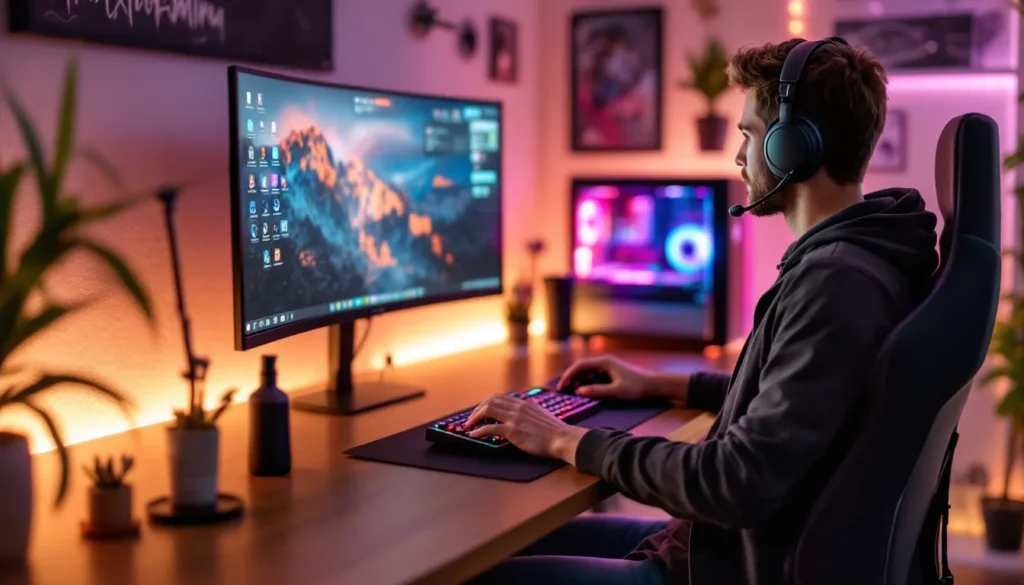
Desk Accessories: Kawaii gaming setups often include thematic desk elements: cute desk mats with game artwork, character figurines, LED lighting in warm tones, and ergonomic seating. These create a psychologically comfortable space that reinforces the welcoming aesthetic of the games themselves.
Display Considerations: If you’re gaming on PC or console, calibrate your monitor or TV for accurate color. Kawaii games rely on color work: incorrect calibration mutes visual impact. A smaller, higher-resolution display often beats a massive lower-resolution one for pixel-art games where individual pixels matter.
Streaming Setup (if applicable): If you plan to stream kawaii games, invest in a capture card (Elgato, AVerMedia) and microphone (Blue Yeti, Audio-Technica) that captures the game audio and your commentary clearly. Kawaii games are incredibly popular on streaming platforms: quality audio and video matter for growing audiences.
The Kawaii Gaming Community and Esports
Community Events and Conventions
Kawaii gaming has spawned vibrant communities offline and online. Gaming conventions increasingly feature dedicated kawaii gaming panels, tournaments, and vendor booths.
Major conventions like PAX, Anime Expo, and Sakura Matsuri feature kawaii gaming prominently. Speedrunning communities at events like Games Done Quick showcase kawaii titles, Celeste, Hollow Knight, and Undertale regularly feature in speedrunning marathons, proving these games’ competitive viability even though (or because of) their cute aesthetics.
Tournaments for kawaii fighting games, roguelikes, and competitive puzzle games have professionalized significantly. Prize pools have grown: player bases have stabilized. Communities organize their own events through Discord, Reddit, and Twitter, creating grassroots tournaments that rival publisher-sponsored competitions in engagement and viewership.
Fan communities produce art, music, and creative works inspired by kawaii games. Fan art communities on platforms like Twitter, Pixiv, and ArtStation generate millions of pieces celebrating these games. Cosplay communities embrace kawaii game characters: conventions feature increasing numbers of elaborately detailed cosplays of characters like Madeline from Celeste or the Knight from Hollow Knight.
Cross-game communities have emerged too. A “cozy games” community appreciates low-stress experiences: a “indie games” community celebrates independent development: a “queer gaming” community finds representation and safety in kawaii spaces. These overlapping communities create networks where people discover new games, build friendships, and develop identity around shared interests.
Streaming and Content Creation
Streaming platforms have made kawaii games more visible and commercially viable for content creators. Streamers of all sizes find audience for cute game content.
Twitch hosts thousands of streamers broadcasting kawaii games. Some focus exclusively on cozy games: others rotate through releases. Kawaii games attract viewers seeking relaxing content, people watch streams to de-stress rather than to learn competitive techniques. This creates different viewer dynamics than competitive shooters or MOBAs.
YouTube creators produce videos ranging from Let’s Plays to detailed analysis. Video essays examining narrative and design in games like Omori or Undertale accumulate millions of views. Tutorial and guide videos help players optimize farming in Stardew Valley or complete challenging bosses in roguelikes.
ContentCreators benefit from kawaii gaming’s aesthetic accessibility. A simple setup with decent lighting and a microphone can produce quality content. The games themselves provide visual interest: the charming aesthetics photograph and broadcast well, making clips share-worthy on social media.
TikTok and short-form platforms have elevated kawaii games further. Viral clips of cute moments or challenging boss fights reach audiences that don’t typically consume gaming content. Major game announcements often launch on TikTok alongside or before traditional platforms.
Content creators have monetized kawaii gaming through sponsorships, Patreon support, and merchandise. Publishers recognize the marketing value of content creators and actively court streamers for promotional campaigns. A single video from a major creator can significantly impact a game’s sales and community visibility.
Community-driven content, player challenges, speedrunning records, modded experiences, extends game lifespans years beyond release. Hollow Knight’s community still produces speedrunning content and challenge runs in 2026, nearly a decade after release. Modding communities transform games with visual mods, gameplay tweaks, and total conversion projects.
Coverage from outlets like Rock Paper Shotgun consistently highlight indie kawaii titles for PC players, while Siliconera provides comprehensive coverage of Japanese and anime-inspired game releases that fall into kawaii spaces. These specialized outlets ensure kawaii gaming receives serious critical attention alongside mainstream titles.
Conclusion
Kawaii gaming isn’t a niche anymore, it’s a genuinely significant force reshaping how we think about game design, accessibility, and player well-being. In 2026, adoring cute games is mainstream, not defensive. Players across all demographics recognize that challenge and charm aren’t opposites: they’re complementary design philosophies.
The genre’s strength lies in its diversity. Whether you’re seeking roguelike difficulty that rivals Souls-likes, narrative experiences that rival prestige television, cozy loop-based gameplay, or competitive esports opportunities, kawaii games deliver. The aesthetic provides a throughline while mechanics and themes vary wildly.
Building your kawaii gaming library requires minimal gatekeeping. Start with accessible titles like Stardew Valley or A Short Hike if you prefer low-stress experiences, or jump into Celeste or Hollow Knight if you want mechanical challenge. Explore based on what appeals to you, not genre expectations.
The community continues expanding. Developers are greenlit projects that might have been rejected five years ago. Streamers find audiences for content that previously seemed unmarketable. Conventions dedicate panels and tournaments to kawaii gaming. The stigma hasn’t vanished entirely, but it’s increasingly irrelevant.
Kawaii gaming succeeds because it respects players. These games don’t demand 100-hour commitments, photorealistic graphics, or cynical narratives. They invite you into worlds that are explicitly designed to feel welcoming. That’s not casual or diminished, that’s wisdom about what people actually want from entertainment in 2026.