
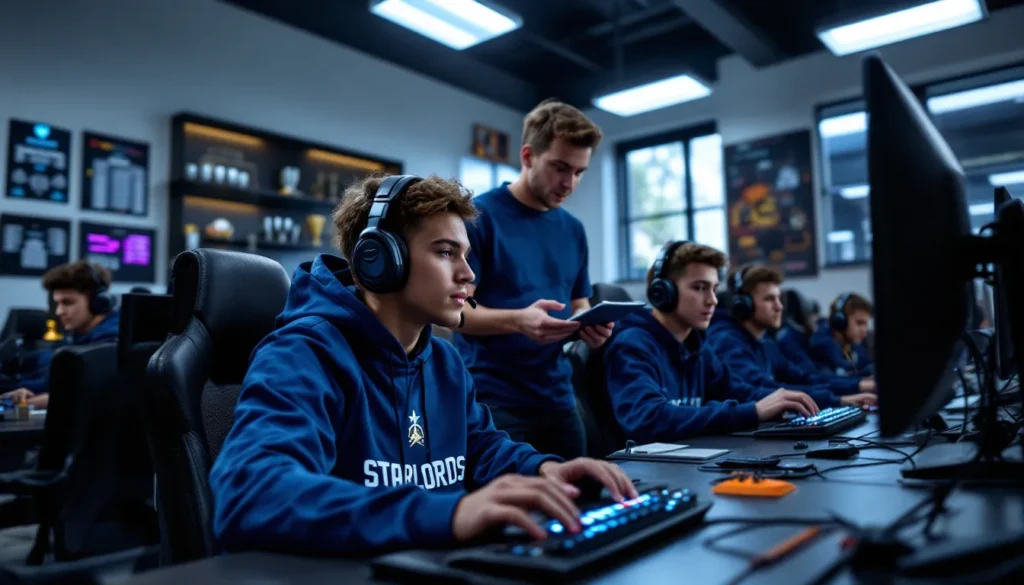
Starting an esports team at school isn’t just about gathering your best friends and hitting ranked queue together. It requires strategy, planning, and a solid foundation to turn casual gaming into organized competition. Whether you’re passionate about League of Legends, Valorant, CS2, or any other competitive title, building an esports team at school can give you structured practice, legitimacy, and a pathway to compete against other schools, potentially even earning recognition and funding along the way. This guide walks you through every step of launching a legitimate esports team, from securing school support to recruiting talent and competing in organized leagues.
Key Takeaways
- Assess your school’s existing gaming culture, available infrastructure, and regional esports leagues before launching your team to ensure realistic planning and leverage existing resources.
- Define a clear mission, select one or two competitive games, and set achievable performance targets—focus on gaining experience and placing in playoffs your first season rather than chasing championships.
- Recruit players based on coachability, commitment, and team chemistry rather than raw mechanical skill alone, and establish clear behavioral expectations to prevent toxicity and maintain a healthy team culture.
- Secure a dedicated practice space and locked-in schedule (2–5 days weekly) with structured sessions including warm-ups, scrimmages, VOD reviews, and strategy discussions led by an assigned captain or coach.
- Establish clear leadership roles (captain, coach, manager, role leads), fund your team through school club budgets or local sponsorships, and start by competing in one to two tournaments your first season to build legitimacy and experience.
- Grow your team long-term by developing a farm system for younger players, retaining talent through recognition and community building, and leveraging your competitive success to increase school pride and recruitment.
Assess Your School’s Gaming Culture and Resources
Before you start recruiting or buying equipment, understand what your school can actually support. Talk to your administration about their current stance on gaming and esports. Some schools treat esports like any other competitive activity, others are still warming up to the idea.
Walk around and identify who’s already gaming at your school. Are there Discord servers? Do students gather in specific areas to game? Is there an existing gaming club or computer lab? This informal audit tells you where interest already exists and what infrastructure you can leverage.
Check what tech your school has available. Many schools have computer labs with decent specs during off-hours. Some have projectors or monitors you could book for practice sessions. If your school lacks basic infrastructure, you’ll need to determine whether you can fund that gap yourselves or if the team will operate with home setups.
Finally, research whether your school district or state has an esports league already. Many do. Organizations like NACE (North American Scholastic Esports Federation) or state-level associations run official circuits with rules, brackets, and legitimacy. Knowing what’s available in your region shapes everything else, from which games to focus on to realistic competitive timelines.
Define Your Team’s Mission, Games, and Competitive Goals
Every solid esports team starts with a mission statement, nothing fancy, just clarity. Are you building a competitive powerhouse aiming for regional tournaments? A casual fun squad focused on team bonding? Something in between? Be honest. This defines recruitment, practice intensity, and expectations.
Choosing Your Primary Games and Secondary Titles
Don’t try to field competitive rosters for five different games. That’s a fast track to burnout and mediocrity. Instead, identify one or two titles to focus on. Pick games where your school has existing interest, where your best players excel, or where there’s active competitive infrastructure.
League of Legends, Valorant, and CS2 dominate scholastic esports right now, they’re well-established in school circuits, have clear competitive formats, and consistent tournament calendars. Fortnite and Overwatch 2 have smaller but passionate school communities. Fighting games like Street Fighter or Tekken appeal to niche audiences but offer tight-knit communities. Mobile titles like Clash Royale exist in school circuits but carry less prestige.
Your secondary title can be lower-stakes, something for team culture building or casual competition. Some teams run a main competitive roster in one game and a fun squad in another. Others rotate games seasonally based on tournament availability.
Setting Realistic Performance Targets
If this is your first season, competing in your local circuit is the target. Aim to place in playoffs if your region has them, get some tournament experience, and build team chemistry. Don’t promise yourself a championship run before you’ve played a single scrim.
Yeah, you want to win. But realistic progression looks like: Season 1, gain experience and establish your team’s identity. Season 2, push for stronger tournament finishes. Season 3+, chase regional or state titles if that’s possible in your league. This mindset keeps morale healthy and sets achievable milestones that actually motivate improvement.
Recruit and Build Your Core Team
Finding Skilled Players in Your School
You don’t need five Valorant Radiant players to start. You need five people who want to improve, can commit to a schedule, and can work together. Start by identifying who your school’s best players actually are. Check who’s actively grinding ranked, who streams or clips their gameplay, or who talks about esports constantly.
Post in the school Discord, social media groups, or your school’s gaming community (if one exists). Be specific: “Recruiting for competitive Valorant team, ranked Gold+, willing to practice 3x weekly.” Clear requirements filter out casual players and signal that this is serious. You’ll still get people who think they’re better than they are, so be prepared with basic skill tests: scrim matches, aim trainers, VOD reviews, or ranked clips.
Don’t discount players who show hunger and coachability over raw mechanical skill. A player with 60% of the mechanical talent but 200% of the competitive drive often outperforms the opposite. Look for people who actively review their own gameplay, ask for feedback, and show up consistently.
Build a deeper roster than just your starting five. Esports at school involves scheduling conflicts, absences, and player burnout. Having substitutes and depth players keeps you competitive and gives people development paths.
Creating Team Chemistry and Culture
Skilled players alone lose to teams with chemistry. Build culture through shared practices, team rituals, and genuine friendships. Host team dinners, watch pro matches together, and celebrate wins publicly. Create inside jokes and team traditions, it sounds cheesy, but it’s the difference between “people who play together” and “a real team.”
Set communication standards. How will you run scrims? What does callout protocol look like? Will you use dedicated Discord channels for strategy, scrims, or venting? Clear communication norms prevent frustration and improve coordination.
Establish behavioral expectations early. Toxicity is cancer in small esports teams, one player flaming others can destroy morale fast. Make it clear that respect, accountability, and constructive feedback are non-negotiable. If someone violates that, address it immediately or they’re out.
Finally, celebrate your players. Recognize grinding, improvement, and clutch plays. Public acknowledgment (social media shoutouts, school announcements, merch) builds pride and keeps people motivated.
Secure Funding, Equipment, and Facilities
You can’t practice serious esports on potato setups. But you also don’t need $50k in gear. Start with a realistic budget.
Essential Hardware and Software Requirements
For competitive games like Valorant or CS2, each player needs access to a PC that hits baseline specs:
- CPU: Ryzen 5 5600X or Intel i5-12400K equivalent
- GPU: RTX 3060 or better (6GB+ VRAM)
- RAM: 16GB minimum
- Refresh Rate Monitor: 144Hz+ (165Hz+ preferred)
- Input Devices: Gaming mouse and mechanical keyboard
- Peripheral: Headset with low-latency audio
For League of Legends, specs can be slightly lower since the game’s less demanding. For fighting games, you might need arcade sticks. For esports at school, most players will use personal setups at home, but you should pool resources for a dedicated team PC or two for practice facility use.
Software needs are minimal: your game(s), Discord for comms, a scrim finder (ESL, ESporta, or game-native matchmaking), and VOD review tools. Most of these are free or built-in.
Now, funding. Start by proposing the team as an official school club. Many schools allocate club budgets, even small ones ($500–$2000 annually) help cover tournament entry fees and basic equipment. Apply for that first.
If school funding isn’t available, run fundraisers. Esports tournaments (hosted by your team for the school), bake sales, or car washes sound basic, but they work. Some teams seek local business sponsorships, internet providers, gaming cafes, or PC retailers sometimes support school teams. Be clear on what sponsorship includes (social media promotion, logo placement, etc.).
Tournament fees are often $100–$500 per team depending on the circuit. Don’t commit to six tournaments in season one, pick three or four that fit your schedule and budget.
Establishing Practice Space and Training Schedule
Esports teams need structure. You can’t just “play together when everyone’s online.” That’s a friend group, not a team.
Secure a dedicated practice space. Ideally, this is a classroom, library, or computer lab your school lets you book during specific hours. Even a corner of the cafeteria with a monitor and some gaming PCs works. The space signals legitimacy to players and administration, and it removes the “random Discord hangout” vibe.
Establish a locked-in schedule. “Tuesdays and Thursdays, 3:30–5:30 PM” is vastly better than “whenever people want.” Consistency builds habits. Players arrange their lives around the schedule, and accountability becomes automatic. During competitive seasons, practice might expand to four or five days weekly. Off-season can drop to twice weekly.
Structure your practice sessions, don’t just freeform scrim. Sample practice breakdown:
- Warm-up (15 min): Aim trainers, mechanical drills
- Scrimmage (45 min): Against another team or bot practice
- VOD review (20 min): Analyze what went wrong, discuss adjustments
- Theorycrafting/strategy (10 min): Meta updates, patch notes, new strats
Assign someone (usually a coach or captain) to lead these sessions. Without a structured leader, practice devolves into chaos. The person running practice should have a plan before each session starts.
Track progress. Keep scrim results, ranked climbing stats, and tournament performance in a shared doc. Looking back at Week 1 versus Week 12 shows tangible improvement and motivates the team.
Organize Leadership and Define Roles
Captain, Coach, and Support Structure
Every team needs clear leadership. The captain is usually the best player or the one with strongest leadership presence. They’re responsible for: in-game communication, lineup decisions, team morale, and communication with administration. Captains don’t have to be the mechanical best, but they need respect and decision-making authority.
If possible, recruit an external coach, someone older (alumni, college player, or local pro) who can analyze gameplay objectively. A coach isn’t playing: they’re reviewing VODs, identifying weaknesses, and suggesting meta adjustments. If external coaching isn’t feasible, assign a player to study pro play and lead strategy discussions.
You also need: a manager (handles scheduling, tournament registration, budget tracking), and role leads for each in-game position. In Valorant, assign leaders for entry fragging, support, sentinel, and controller roles. In League, mid-lane and ADC leads help develop those roles specifically. These role leads mentor depth players and ensure position-specific fundamentals stay sharp.
Make role definitions and expectations crystal clear. Everyone knows their job, their chain of communication, and what success looks like. Ambiguity breeds resentment.
Hold regular captain/coach meetings (bi-weekly) to assess team health, discuss performance issues, and plan ahead. Keep team meetings focused and monthly unless crisis-mode demands more. Long meetings kill morale: get in, discuss necessities, get out.
Register for Competitive Leagues and Tournaments
Local, Regional, and Interscholastic Competitions
Research what leagues exist in your region. Start with official scholastic circuits, your state may have an esports league affiliated with NACE or a state athletic association. Check organizations like Dot Esports for coverage of scholastic circuits and tournament availability in your area.
If your state/region has an official league, register there first. These leagues typically: provide bracket legitimacy, enforce rules, handle dispute resolution, and sometimes feature prize pools or scholarships. Even if the competition is regional, it’s better organized than random online tournaments.
Secondary options include ESL Go4 tournaments (free online qualifiers), game-specific competitive platforms, or organizer sites like ESporta. For League of Legends specifically, check LoL Esports for any affiliated school tournaments.
Start with one or two tournaments your first season, don’t overcommit. Pick events that match your schedule and skill level. Winning your first tournament isn’t realistic: placing top-4 or just getting match experience is the win.
Register early. Tournament rosters often lock weeks in advance, and popular events fill up. Also, lock in your starting five before registration, nothing’s worse than roster drama mid-season.
Attend tournaments in person when possible. The energy, learning from other teams, and team bonding that happens at LANs (local area networks) is invaluable. It also signals to your school that this is a legitimate competitive pursuit, not just online gaming.
Grow Your Team and Build Long-Term Sustainability
Expanding Membership and Retaining Players
Your first season establishes foundation. Year two is about growth. As you prove results and build credibility, recruitment becomes easier, younger players see the team winning or placing well and want in.
Develop a farm system. Not everyone on the roster starts. Secondary and tertiary teams give developing players minutes and tournament experience. Players climb through the ranks as they improve. This also prevents burnout, a player might step back from the main roster temporarily without leaving the organization entirely.
Retain your best players by keeping the experience rewarding. Competitive success is one motivator, but also: recognition (team features in school announcements, social media highlights), development (clear paths to improvement and leadership roles), and community (genuine friendships, team culture).
Expect some turnover, graduates leave, life priorities shift. Have a succession plan. Identify promising younger players now who’ll anchor the team in future years.
Creating Community and School Pride
Once your team gains traction, leverage it for broader school engagement. Host esports viewing parties when big tournaments happen. Show VODs of your team’s best matches. Invite other students to tryouts. Use school announcements and social media to celebrate wins.
Consider custom esports jerseys for team identity and performance, seriously, branded team gear builds pride and visibility. Even simple matching hoodies with team names and logos make players feel official.
If your school has a streaming capability, stream your matches. Audiences (even small ones) motivate players and attract interest from underclassmen. Promote streams on school social media.
Partnering with other clubs (debate, robotics, STEM clubs) normalizes esports alongside other competitive activities. Some schools even feature esports in sports lineups or athletic newsletters once the team proves legitimacy.
Most importantly, document your journey. Keep records of tournament finishes, player achievements, and team milestones. These become recruiting tools and historical pride for future rosters.
Conclusion
Building an esports team at school requires vision, organization, and persistence. You’re essentially starting a mini-esports organization, it demands recruitment, budgeting, scheduling, leadership, and long-term planning. But the payoff is real: structured competitive gaming, legitimate tournament experience, school recognition, and genuine friendships built around shared goals.
Start small. Pick one or two games, recruit five serious players, secure a practice space, and register for a local tournament. Execute that foundation flawlessly first season. Once you’ve proven the concept works, expand from there. Year two builds on what year one established. By year three, your team becomes an institution, younger players aspire to join it, your school takes it seriously, and you’re competing at legitimately high levels.
The esports landscape in schools keeps evolving. More schools are adding teams, leagues are professionalizing, and players are discovering real career pathways through scholastic competition. If you’re passionate about competitive gaming, starting a team at school puts you at the forefront of that shift. And who knows, five years later, you might be the alumni coach mentoring the next generation of your school’s esports program.