
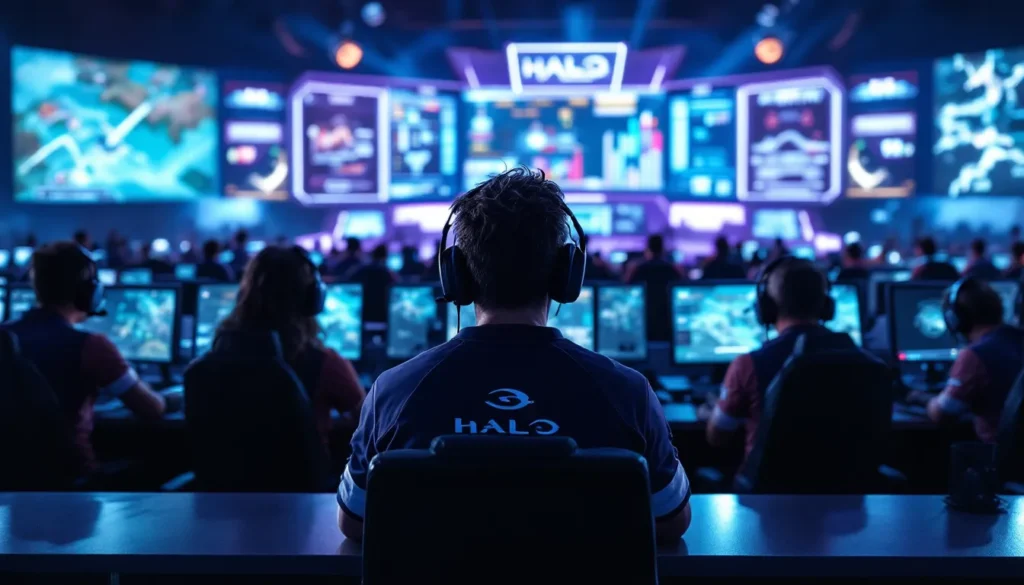
Halo esports has evolved from a niche competitive community into a legitimate global phenomenon, drawing millions of viewers and attracting top-tier sponsorships from major organizations. Whether you’re a seasoned competitor looking to climb the ranks or a fan curious about what makes the Halo competitive scene so compelling, understanding the landscape is essential. In 2026, Halo esports continues to push boundaries with professional tournaments, talented rosters, and gameplay mechanics that reward both individual skill and team coordination. This guide breaks down everything you need to know about Halo esports, from the tournaments that matter to the meta strategies dominating the scene and how to get involved yourself.
Key Takeaways
- Halo esports has evolved into a global competitive phenomenon with professional tournaments, million-dollar prize pools, and top-tier organizational investment.
- The free-to-play model of Halo Infinite has dramatically expanded the player base while maintaining competitive integrity through ranked systems and tournament infrastructure.
- Halo esports is dominated by teams like FaZe Clan, OpTic Gaming, and G2 Esports, whose success depends on mastering the dual-BR meta, AR close-quarters control, and sniper positioning.
- The competitive meta focuses on weapon mastery (Battle Rifle, Assault Rifle, Sniper) and utility management, with 343 Industries maintaining stability over heavy-handed patch updates.
- Aspiring competitors can break into professional play by grinding ranked to Diamond/Onyx, competing in open tournaments, building team chemistry, and networking at regional LANs and invitationals.
- Halo esports is positioned for sustainable growth through franchise expansion, international talent development, and natural spectator accessibility that attracts both casual and hardcore viewers.
What Is Halo Esports and Why It Matters
Halo esports refers to the competitive multiplayer ecosystem built around the Halo franchise, encompassing everything from casual ranked play to professional tournaments with million-dollar prize pools. Unlike single-player focused franchises, Halo’s design has always centered on balance, team-based gameplay, and skill-based combat mechanics that translate well to competitive environments.
Why does Halo esports matter? First, it established many conventions that modern esports follow today. Halo was among the first console-based esports to gain mainstream traction, paving the way for franchised leagues and professional infrastructure. Second, the competitive Halo community has proven remarkably resilient and passionate, maintaining viewership and player engagement across multiple game iterations. Third, Halo esports attracts serious players and organizations because the skill ceiling remains sky-high, map knowledge, weapon control, team communication, and clutch decision-making all separate pros from casuals.
In 2026, Halo’s competitive relevance stems from Halo Infinite remaining the primary competitive title, offering a free-to-play model that lowers barriers to entry while maintaining hardcore competitive integrity through ranked systems and tournament infrastructure.
The Evolution of Halo in Competitive Gaming
Early Days: Setting the Foundation
Halo’s competitive legacy began with Halo 2 (2004), which introduced online multiplayer and accidentally created the conditions for organized competitive gaming. The Bungie-developed title featured precise weapon mechanics, map symmetry, and framerate-locked 60 FPS gameplay that felt tight and responsive. Players gravitated toward modes like Slayer (team deathmatch) and Capture the Flag (CTF), which remain competitive staples today.
The release of Halo 3 (2007) cemented competitive infrastructure. This title introduced forge mode (custom map creation) and robust theater features, allowing players to analyze and learn from gameplay footage. Major tournaments like the CPL (Cyber Athelte Professional League) and MLG’s Halo circuit drew prize money and sponsorships, establishing Halo as a legitimate esport alongside StarCraft and Counter-Strike.
Halo: Reach (2010) refined competitive mechanics further with loadout customization and increased weapon variety, though some veterans argue it diluted the pure skill-based nature of earlier titles. Regardless, competitive Halo remained strong through the Xbox 360 era.
Modern Era: Halo Infinite and Beyond
Halo Infinite (released November 2021) marked a seismic shift. 343 Industries took over from Bungie and designed the game with esports at the forefront. The free-to-play model dramatically expanded the player base, feeding more talent into the professional ranks. The competitive sandbox features a tighter weapon meta with the AR (Assault Rifle), BR (Battle Rifle), SMG (Submachine Gun), and Sniper Rifle all serving distinct roles.
Key competitive characteristics of Halo Infinite include:
- No sprint or ability spam: Traversal is limited, keeping engagements deliberate and map control paramount.
- Shield system with precision weapons: The BR and Sniper reward accuracy and headshots in a way few shooters do.
- Equipment pickups (Grappling Hook, Active Camo, etc.): These items shift power dynamics and create clutch moments without being overpowered.
- Ranked system tied to tournament play: Players can grind to Diamond, Onyx, and Mythic ranks, with top players invited to pro tournaments.
By 2026, competitive Halo Infinite has matured significantly. The meta is stable, patch updates are thoughtful rather than heavy-handed, and professional organizations see it as a long-term investment. The game’s 120 FPS capability on next-gen consoles (Xbox Series X/S) and PC has made it the fastest, most responsive Halo ever, critical for high-level play where millisecond differences matter.
Major Halo Esports Tournaments and Leagues
The Halo Championship Series
The Halo Championship Series (HCS) is the official esports league for Halo, operated by 343 Industries and currently administered by ESL (ESIC). As of 2026, the HCS structure includes:
HCS Kickoff (Winter/Spring): A grassroots tournament inviting teams from around the world to compete for ranking points and prize money. This tier allows emerging teams to prove themselves against established organizations.
HCS Global Championships (Summer): The premier international event where the best teams from each region converge to compete for the title of world champion. Prize pools typically exceed $5 million, with regional winners receiving direct invitations.
Regional Splits: The HCS operates separate regions, North America, Europe, and International, with weekly online tournaments and qualifying matches. This structure ensures consistent competitive play and prevents any single region from monopolizing the scene.
Pastournament victories in recent years have been dominated by teams like FaZe Clan, OpTic Gaming, and G2 Esports, though the competitive landscape shifts with roster changes and meta shifts.
Regional and International Competitions
Beyond the official HCS, regional grassroots tournaments and qualifiers feed talent into the professional ecosystem. National tournaments in countries like the UK, EU nations, and ANZ (Australia/New Zealand) provide pathways for local talent. These regional events are crucial, many pro players started grinding ladder matches and small LAN tournaments before breaking into HCS.
International open tournaments hosted on platforms like Smash.gg or ESL’s own portal allow any team to register and compete online. Prize pools vary wildly, some are $5K opens, others reach $50K, but all serve the same function: creating opportunities for skilled players to network, build credentials, and eventually attract org attention.
Content coverage of these tournaments is extensive. Esports news outlets such as Dot Esports provide real-time tournament updates, analysis, and player interviews that keep fans and aspiring pros informed.
Key Players and Teams Dominating Halo Esports
Top Professional Teams
As of 2026, several organizations have cemented themselves as Halo esports powerhouses:
FaZe Clan: With multiple world champions on their roster, FaZe remains the team to beat. Their players combine exceptional mechanical skill with veteran game sense. Notable FaZe players include Snakebite (legendary AR player and team leader) and Falcated (inconsistent but explosive slayer). FaZe’s strength lies in their consistency and adaptability to meta shifts.
OpTic Gaming: The organization’s Halo division has produced legendary rosters and continues to attract premium talent. OpTic’s emphasis on team chemistry and dual-BR play (two rifles, two utility) has proven effective. Their recent roster includes players known for high mechanical skill and composure under pressure.
G2 Esports: Rising to prominence over the last two seasons, G2 has invested heavily in Halo, assembling an international roster with chemistry and raw talent. Their willingness to experiment with unconventional strategies keeps opponents guessing.
Spacestation Gaming: A consistent competitor in HCS events, Spacestation maintains a smaller but highly coordinated roster. They’re known for disciplined play and excellent callouts.
KC Rejects: An underdog organization that has made surprising deep runs in international events, proving that chemistry and hunger can compete with star-studded rosters.
Rising Stars and Notable Players
While established orgs dominate, individual talent continually rises. Watch for:
Formal: A legendary Call of Duty veteran who transitioned to Halo and has impressed with his tactical awareness and weapon control. His AR fundamentals are elite.
Lucid: Known for exceptional sniper play and clutch moments in high-pressure situations. Teams value his consistency with precision weapons.
Spartan: A young talent emerging from ranked play with raw mechanics that remind veterans of early-career legends. His ceiling remains unknown but appears very high.
Lethul: An icon in the Halo community since Halo 5, still competing at a top level with intelligent positioning and leadership. His veterans presence stabilizes younger rosters.
Many of these rising players compete in BBL Esports: Dominating structures or regional qualifiers before attracting org attention. The professional pipeline is real, today’s ranked ladder grinders become tomorrow’s pro players.
Gameplay Mechanics and Competitive Meta
Essential Game Modes in Competitive Play
Competitive Halo Infinite focuses on three primary modes:
Slayer: Pure team deathmatch where eliminating opponents and denying enemy respawns determine victory. Teams earn a point for each kill: first to the score limit (typically 50 points) wins. Slayer tests individual aim, positioning, and awareness. The meta emphasizes map control of high-traffic areas like Reactor (on Bazaar) or Blue Base (on Recharge).
Capture the Flag (CTF): Asymmetrical mode where one team attacks the enemy base to steal and return their flag while defending their own. CTF demands communication, timing, and split-second decision-making. Teams often employ flag routes (predetermined paths) and offenses/defenses (distinct player roles). The attacking team needs a flag carrier (slayer-heavy player with positioning skills) and support (players controlling lanes to protect the carrier).
King of the Hill: Territorial control mode where teams compete to occupy a rotating hill location for the majority of match duration. Holding the hill grants points per second: teams must push together, secure positions, and deny pushes. This mode heavily rewards utility usage and grenade placement.
Current Meta Strategies and Weapon Dynamics
As of 2026, the competitive meta has stabilized around specific weapon pairings and player roles:
The Dual-BR Setup: Two players spawn with Battle Rifles as primary weapons, positioning themselves to control mid-map or power positions. The BR’s 4-shot kill (precision headshots) and consistent TTK (time-to-kill) of roughly 1.2 seconds makes it foundational. Pros maintain a 65%+ accuracy with the BR, anything less risks losing crucial engagements.
AR Dominance in Close Quarters: The Assault Rifle remains the optimal weapon for 1v1 close-range duels. Its high magazine capacity and TTK advantage in tight spaces make it the go-to for players holding tight corners or defending power positions. AR players are valued for their slaying potential and aggressive playstyle.
Sniper Control: A single Sniper Rifle spawn on each map creates dynamic gameplay. Teams often dedicate their best precision player to sniper duty, which demands exceptional aim but offers massive tempo shifts. A good sniper pick can swing a round, teams losing sniper control often lose the match.
Utility and Equipment: Grappling Hooks, Active Camo, and Threat Sensors (equipment) provide counterplay and clutch mechanics. Smart equipment usage separates good teams from great ones. For instance, using Camo to steal a flag or grapple to reposition during a defensive hold can turn rounds.
Grenade Economy: High-level play involves precise grenade usage. Teams farm grenades (coordinate kills to generate grenade pickups), time throws to damage or flush enemies, and deny enemy grenade access. Wasting grenades is a cardinal sin.
Recent patch updates (as of March 2026) have slightly buffed the AR’s range and adjusted sniper knockback, but the core meta remains BR-heavy at range and AR-focused in close quarters. Meta shifts happen gradually in Halo Infinite because 343 Industries favors balance over dramatic overhauls, unlike some shooters that flip the meta with each patch.
How to Watch and Support Halo Esports
Where to Stream and Find Schedule Information
Halo esports content is widely accessible, with multiple platforms hosting official broadcasts and community coverage:
Official HCS Streams: 343 Industries broadcasts major tournaments on Twitch (primarily the Halo Esports channel) and YouTube. These streams feature professional commentary, replays, and production quality that rival other major esports.
Regional Broadcasts: Separate Twitch channels cover North America, Europe, and International regions. Matches are typically played Wednesday-Sunday evenings, with schedules released monthly.
Community Content: Individual players and organizations stream ranked matches, scrimmages, and practice sessions on personal Twitch channels. Watching pro streams is an excellent way to learn positioning, callouts, and meta strategies in real-time.
Tournament Coverage: Beyond official streams, esports news sites like Dexerto provide real-time match updates, statistics, and post-tournament analysis. These outlets employ veteran esports journalists who contextualize results and player performances.
To find official schedules, visit hcs.halowaypoint.com or check the HCS Twitch channel for upcoming events. Most major tournaments operate on 2-3 month cycles, with qualifiers, group stages, and playoffs clearly laid out.
Getting Involved as a Fan or Aspiring Competitor
For Fans: Supporting Halo esports is as simple as watching matches and engaging with the community. Follow pro players on social media (Twitter/X, YouTube), discuss matches in subreddits like r/CompetitiveHalo, and attend LAN events when possible. Major tournaments occasionally host live events in cities across North America and Europe.
For Aspiring Competitors: The pathway to pro play is clearer than ever:
-
Grind Ranked: Push to Diamond or Onyx rank (top ~5% of players). Consistency here demonstrates you can compete at a high level.
-
Participate in Opens: Register for open tournaments on Smash.gg or ESL. Even losing runs provide valuable LAN experience and networking.
-
Build a Team: Team chemistry matters enormously. Find players with complementary skills and compatible personalities. Stream your team’s matches to build visibility.
-
Attend Invitationals: Regional invitationals and grassroots LANs are the primary way orgs scout talent. Placing well here can attract org interest.
-
Network: Engage with the community at LANs and online. Make your intentions clear, serious orgs notice dedicated, respectful players.
Excellent resources for aspiring pros include Xbox’s official Pure Xbox community guides and competitive-focused Discord communities like the HCS Academy server, where players share tips, find teammates, and discuss strategy.
The barrier to entry is remarkably low: all you need is Halo Infinite (free-to-play on PC and Xbox), an internet connection, and commitment. Hundreds of players have followed this path to professional play.
The Future of Halo Esports
Looking ahead to 2026 and beyond, Halo esports appears positioned for sustainable growth and evolution. Several factors suggest optimism:
Engine Updates and Gameplay Refinement: 343 Industries continues iterating on Halo Infinite’s competitive experience. Anticipated patches may introduce new weapons or adjust existing ones, but the core gameplay loop remains beloved by pros and fans alike. The game engine is stable enough for long-term competitive investment.
Franchise Expansion: Several major esports organizations that previously withdrew from Halo (due to budgetary constraints in the mid-2010s) have signaled interest in re-entering the competitive ecosystem. This could lead to franchised league structures similar to Valorant or Overwatch, guaranteeing revenue and legitimacy.
International Growth: While traditionally dominated by North American and European teams, emerging regions show increasing Halo engagement. Australian/New Zealand teams are competitive, and international rosters are gaining traction. Broader geographic representation strengthens the esports ecosystem long-term.
Content and Streamability: Halo Infinite is naturally spectator-friendly, viewers immediately understand what’s happening, team fights are exciting, and mechanical outplays are obvious to casual audiences. This accessibility should continue driving viewership growth compared to more complex esports titles.
Potential Challenges: Not all winds are favorable. Continued competition from other free-to-play shooters (Valorant, Apex Legends esports growth, and potential new IP) means Halo must maintain quality and innovation. Player retention depends on 343 keeping the meta fresh without destabilizing competitive integrity.
Overall, Halo esports stands at a promising inflection point. The foundational community exists, professional infrastructure is robust, and player skill levels continue rising. Whether Halo becomes a top-tier esport (matching League of Legends or Dota 2 viewership) depends on execution from 343 Industries and continued investment from major organizations, but the ingredients are in place.
Conclusion
Halo esports represents one of gaming’s most enduring competitive franchises, a legacy built on precision mechanics, team-based gameplay, and a community that refuses to abandon its favorite series even though industry shifts. From the early days of Halo 2 on Xbox Live to today’s multi-million-dollar HCS tournaments, the competitive landscape has evolved dramatically while maintaining the core appeal that made Halo a staple of esports.
Whether you’re drawn to watching pro players showcase insane mechanical skill, learning meta strategies to climb ranked ladder, or dreaming of competing professionally yourself, Halo esports offers a legitimate and accessible entry point. The professional scene in 2026 is healthier than it’s been in years, talent is distributed globally, rosters are competitive, and the game itself rewards both individual brilliance and team coordination.
The competitive Halo community isn’t the largest esports audience, but it’s undoubtedly one of the most dedicated. Pick a tournament, jump into a stream, or download Halo Infinite and start grinding. The scene welcomes new players, new fans, and the next generation of pros.